Today, real-time asset tracking plays a crucial role in various industries including logistics, healthcare, and manufacturing. Tracing the equipment in a hospital or inventory in a warehouse will determine the level of efficiency and cost savings. Therefore, more and more often the question of BLE versus RFID becomes relevant while choosing the appropriate technology. Each technology has excellent tracking capabilities but operates differently.
What is BLE?
Bluetooth Low Energy or BLE is a wireless technology designed to operate with low energy consumption and commonly used for tracking.
How BLE Works
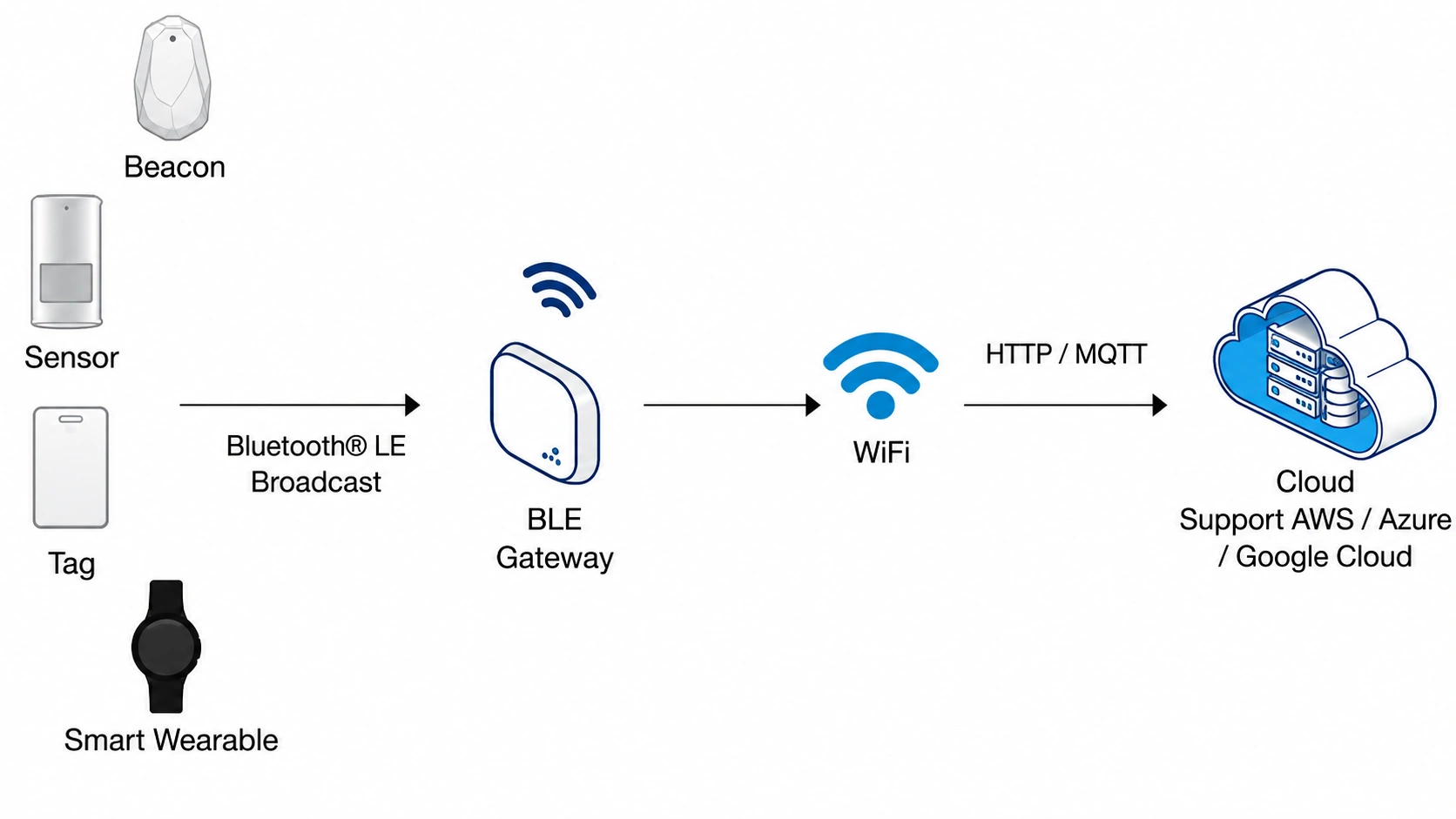
The principle of operation of BLE involves attaching small devices or beacons to the asset. The beacon constantly sends signals.
These signals are received by another device called gateway or mobile phone and sent further to the software. Based on signal strength, it is possible to trace the location of an asset.
Where BLE is Used
BLE is commonly used in:
- Warehouses for tracking moving items
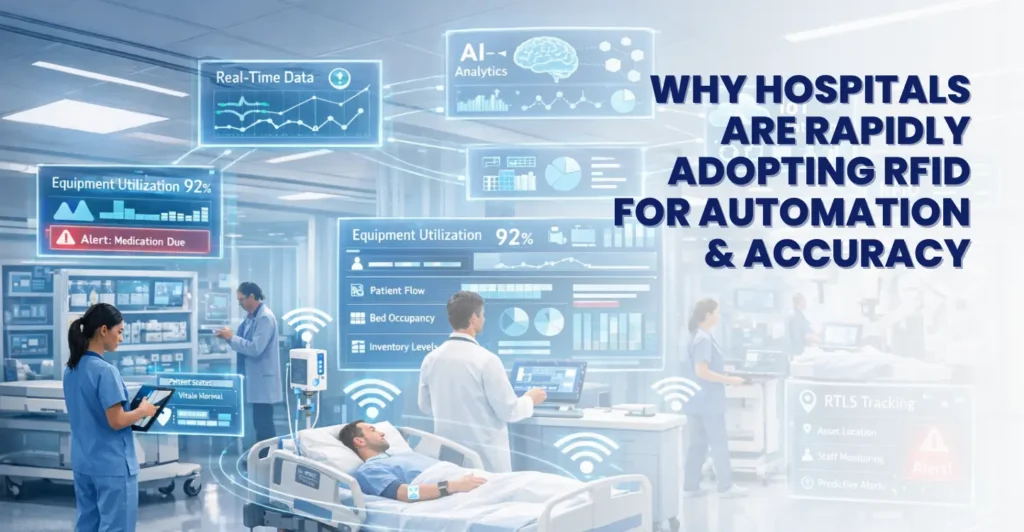
- Hospitals to locate equipment quickly
- Campuses for student/employee tracking and navigation
This is why Bluetooth tracking is useful when you need live location updates.
What is RFID?
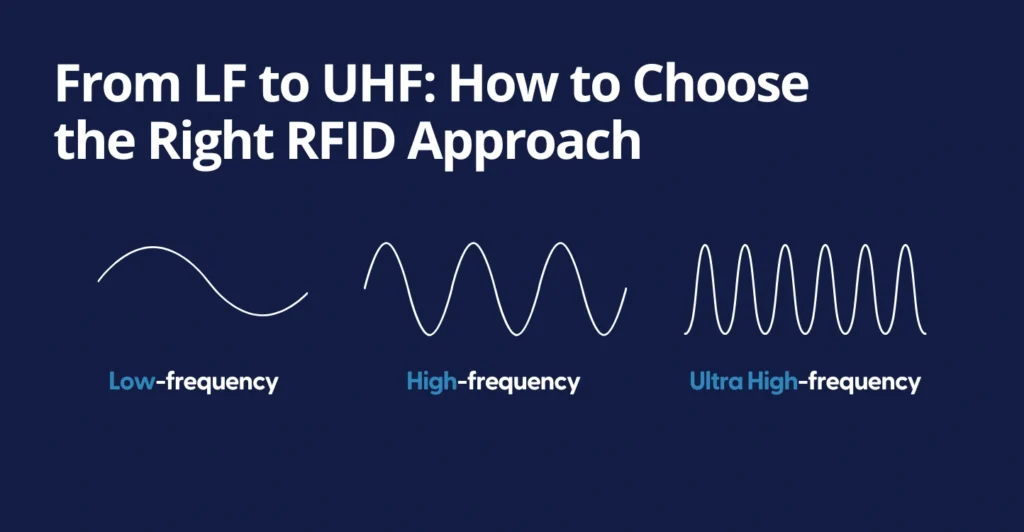
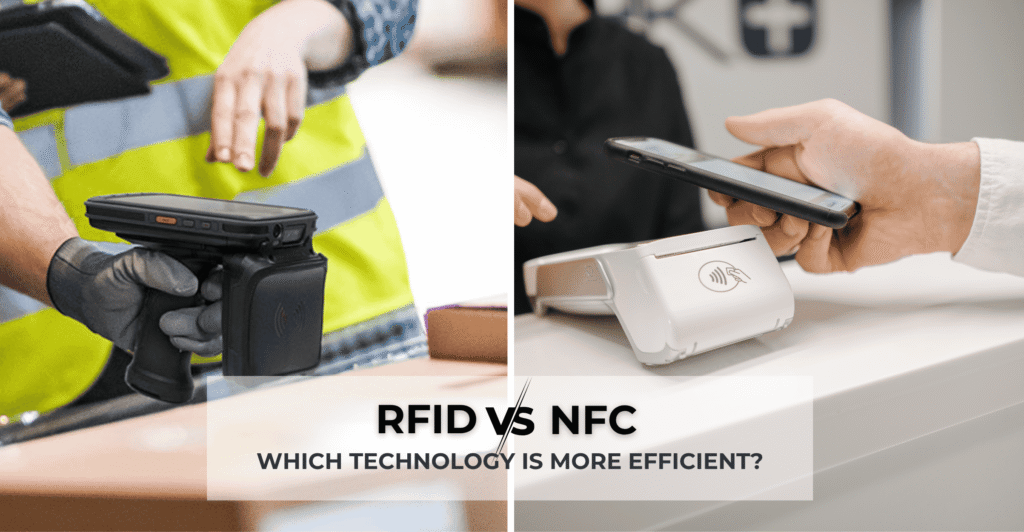
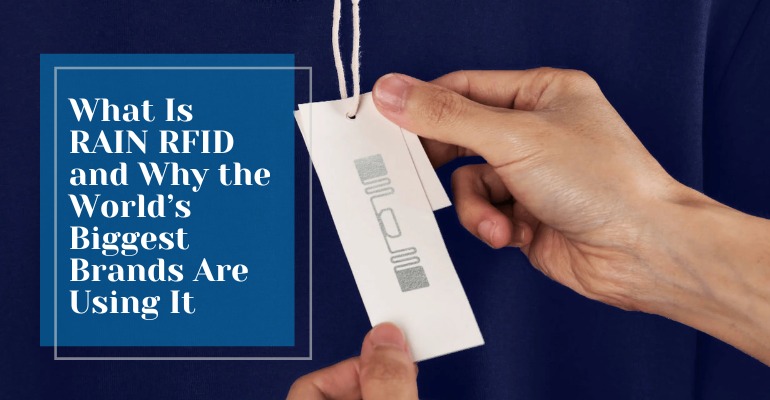
RFID stands for Radio Frequency Identification. RFID is a wireless technology that is used in tracking items through the use of electromagnetic fields. RFID is one of the most thoroughly tested technologies for asset and inventory tracking.
Unlike traditional barcode systems, RFID does not require a direct line of sight to read information. RFID tags can be automatically detected by RFID readers, allowing organizations to identify and track multiple assets simultaneously. This capability helps businesses improve operational efficiency, reduce manual errors, and gain better visibility into their assets.
RFID technology is widely used across industries such as warehousing, logistics, healthcare, manufacturing, retail, and access control. Whether tracking inventory in a warehouse, monitoring valuable equipment in a hospital, or managing fixed assets in an enterprise, RFID provides a reliable and scalable solution for asset identification and tracking.
How RFID Works
An RFID system includes:
- Tags affixed to the assets
- Scanners used to read the tags
- Software to process information collected

There are two main types:
- Passive RFID (no battery)
- Active RFID (with battery)
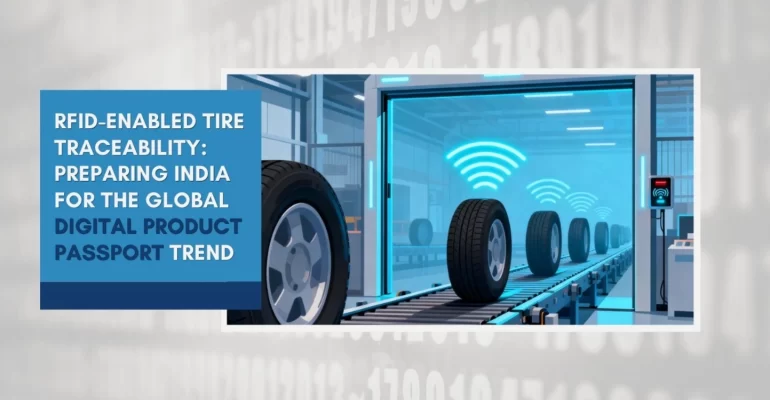
Passive RFID tracking is widely used because it is low-cost and easy to manage.
Where RFID is Used
RFID is commonly used in:
- Inventory management
- Supply chain tracking
- Access control systems
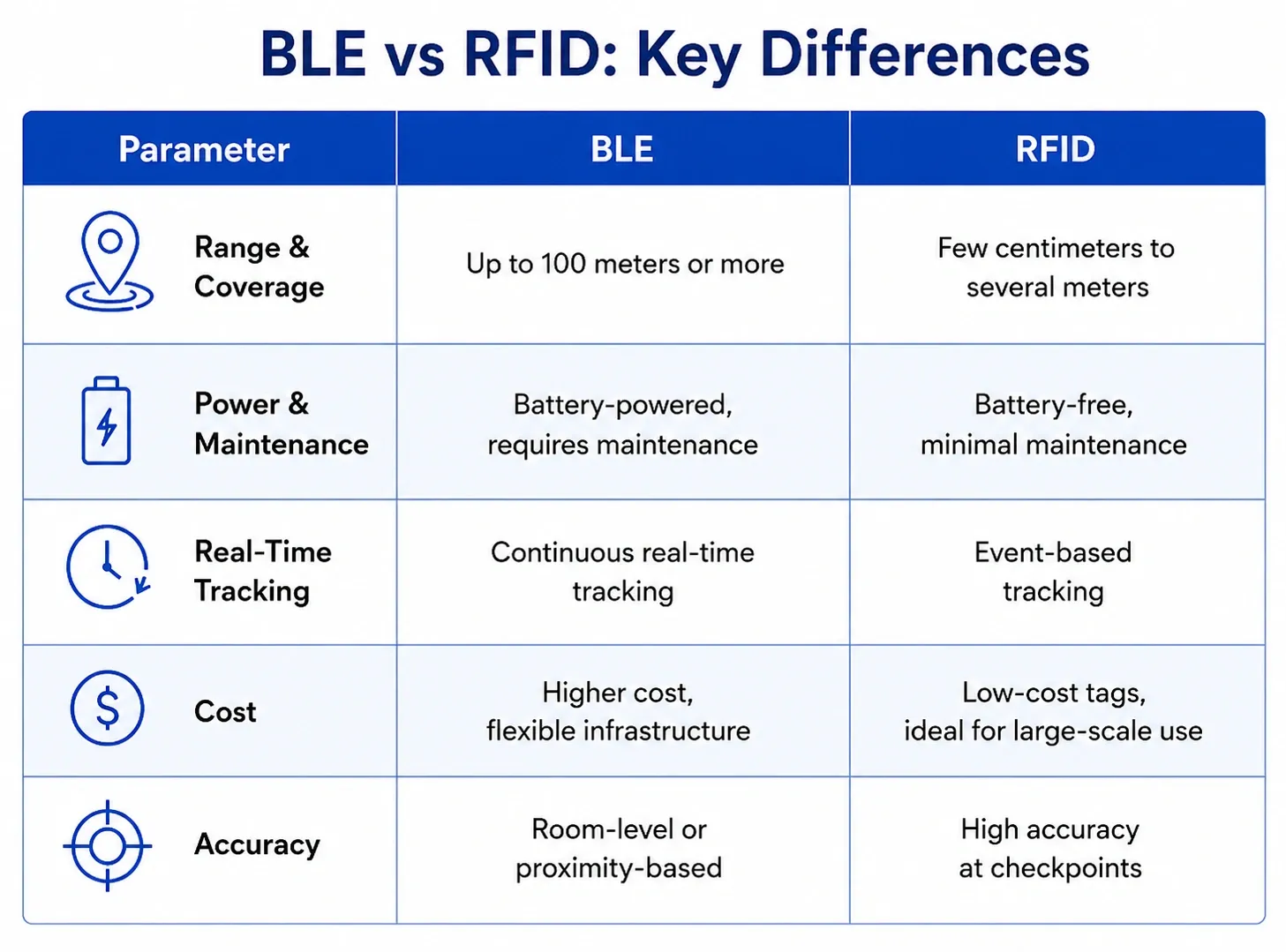
BLE vs RFID: Key Differences
When comparing BLE vs RFID, the differences come down to functionality, cost, accuracy, and use case.
Which Technology is Best for Real-Time Asset Tracking?
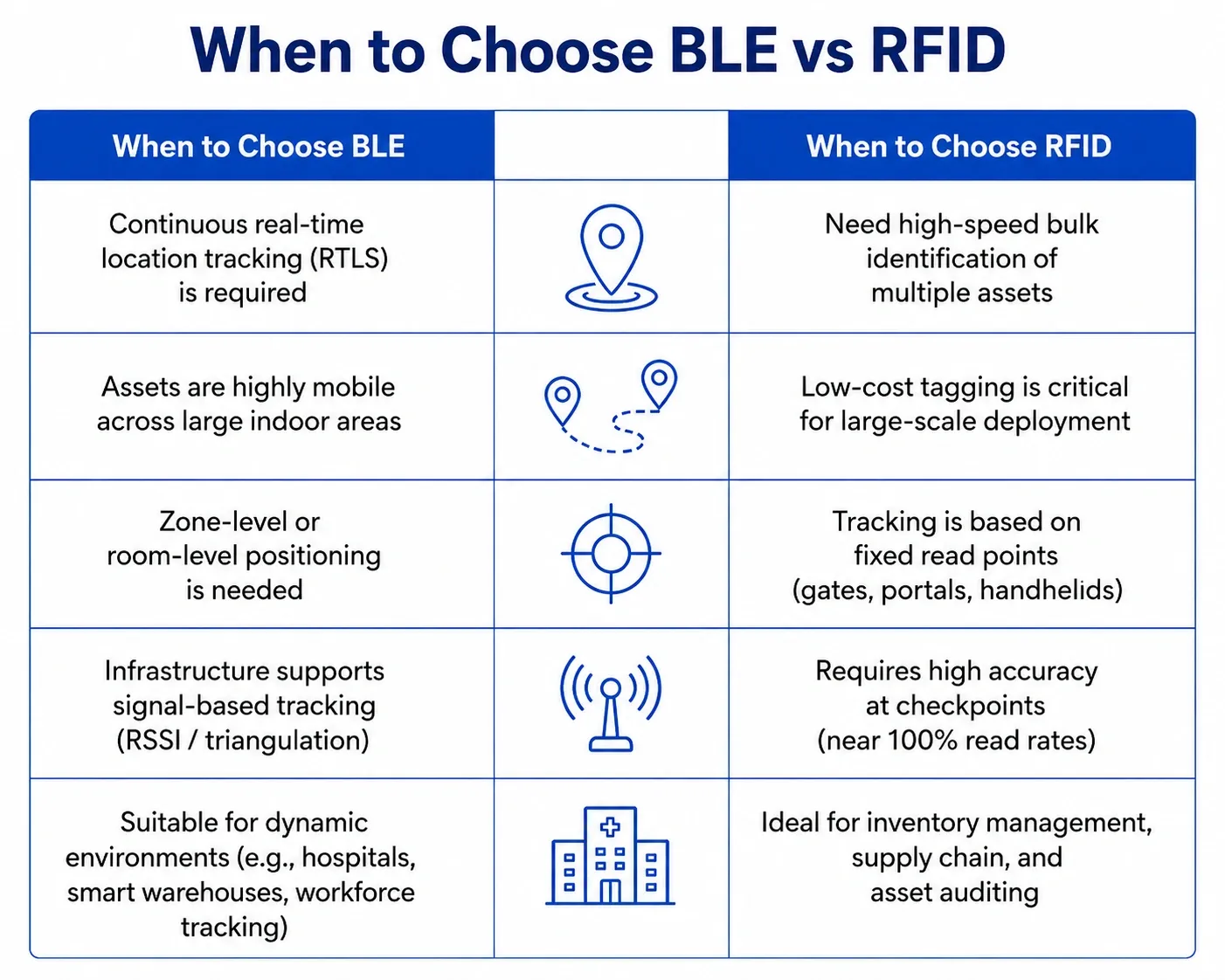
Choosing between RFID and BLE depends heavily on your operational requirements.
If your priority is continuous, real-time visibility, then BLE asset tracking is often the better choice. It allows organizations to monitor asset movement dynamically without requiring manual scanning.
However, if your goal is efficient inventory management with minimal cost, then RFID asset tracking stands out. It’s particularly effective in environments where assets move through defined checkpoints.
Cost Comparison
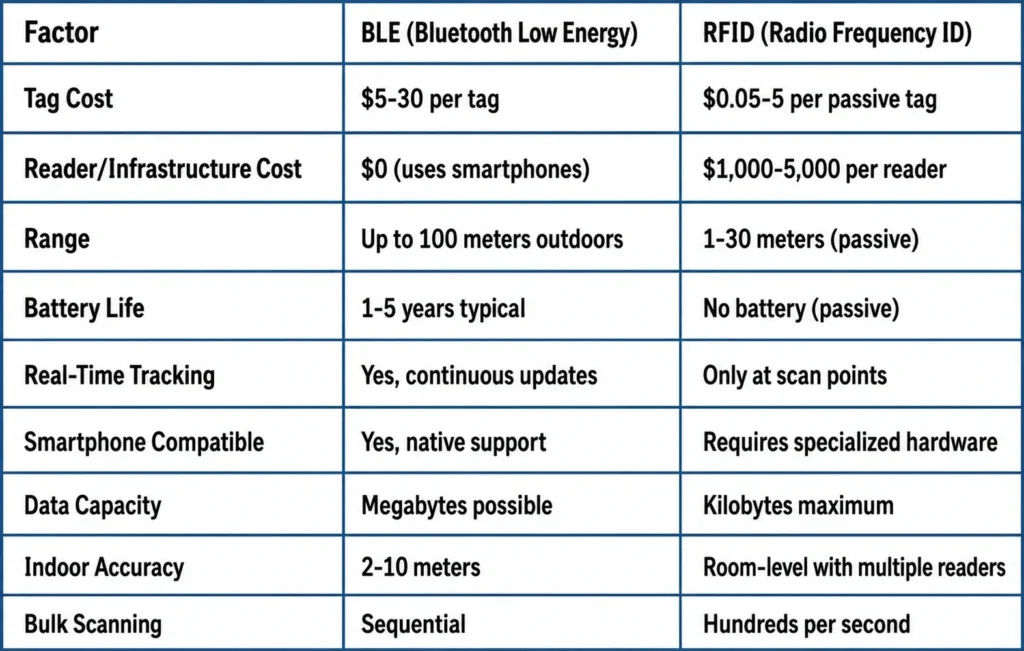
RFID technology costs less than BLE technology, particularly when implemented at a huge scale. Passive RFID devices have extremely low prices.
BLE is relatively expensive, yet offers real-time tracking, which can result in saving time and money eventually.
Therefore, everything depends on the type of your enterprise.
Conclusion
Both Bluetooth Low Energy (BLE) and Radio-Frequency Identification (RFID) are excellent solutions that will significantly increase the efficiency of asset tracking. However, the decision depends on what the company requires.
When real-time tracking is a crucial element for the company, BLE technology would be more beneficial. When scalability and affordability are essential factors, then RFID should be chosen.
The combination of both BLE and RFID may produce the best outcome for the majority of companies.