In today’s warehouses, distribution centers, and retail supply chains, businesses handle a huge number of products every day. When cartons contain multiple RFID-tagged items, scanning each item manually takes time and increases the chances of human error.
To solve this, ID Tech Solutions Pvt. Ltd. offers the IDT RFID Tunnel Reader System for automated bulk RFID scanning in conveyor-based operations.
The system helps businesses automatically identify and verify RFID-tagged products while cartons move on the conveyor, without stopping the workflow.
What Is an RFID Tunnel?
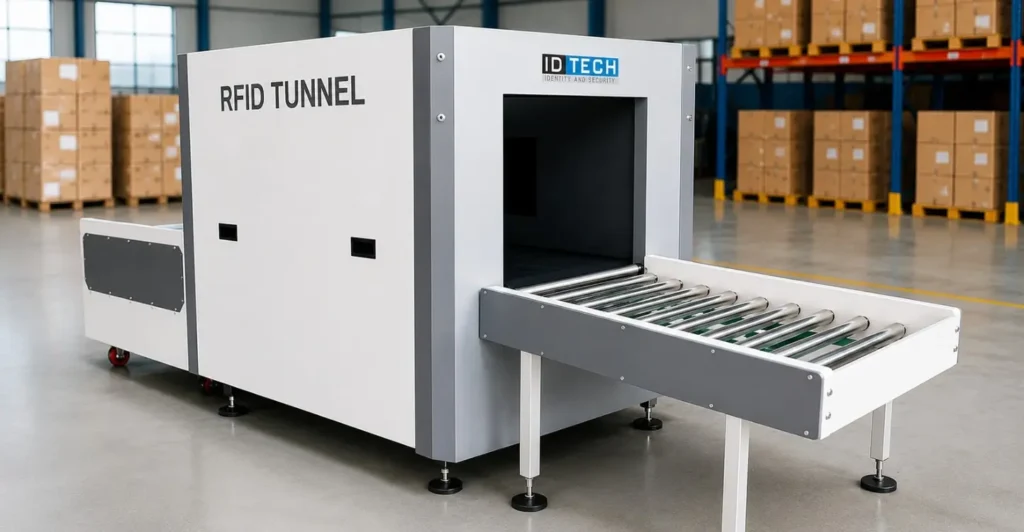
An RFID tunnel is an enclosed RFID scanning setup installed around a conveyor line. It creates a controlled RF reading zone where RFID-tagged cartons, boxes, files, or products can be scanned automatically while moving through the tunnel.
Compared to manual scanning or handheld readers, RFID tunnels are mainly used for:
- Bulk RFID tag reading
- High-speed conveyor operations
- Automated inventory verification
- Real-time tracking and dispatch validation
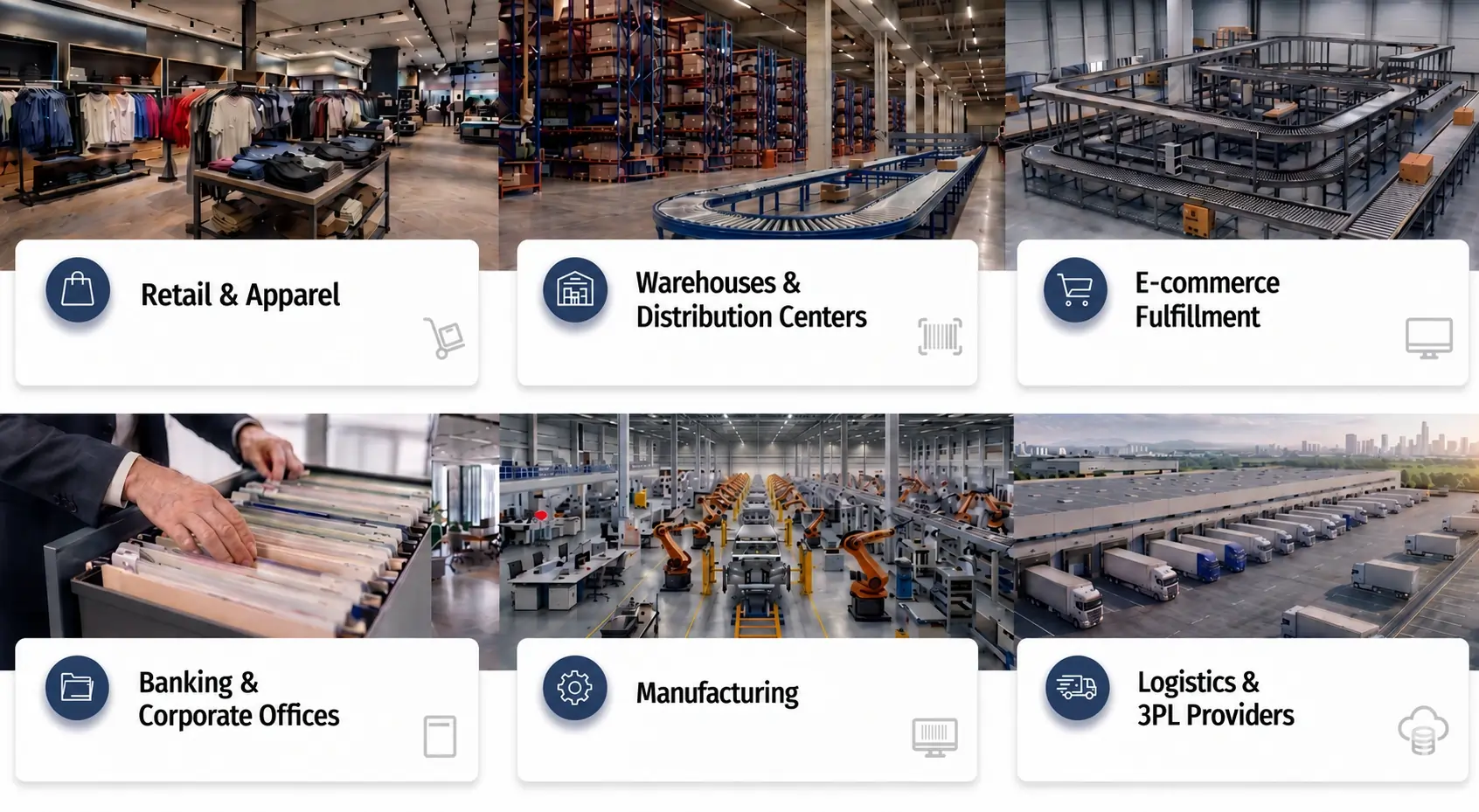
RFID tunnel systems are commonly used in warehouses, retail fulfillment centers, manufacturing units, logistics hubs, and asset tracking applications.
How RFID Tunnel Readers Work?
An RFID tunnel system combines different RFID components to create a controlled and accurate reading environment.
A typical setup includes:
- RFID tunnel enclosure
- UHF RFID antennas
- Fixed RFID readers
- Conveyor integration
- RF shielding mechanisms
- Middleware and software integration
As cartons move through the tunnel:
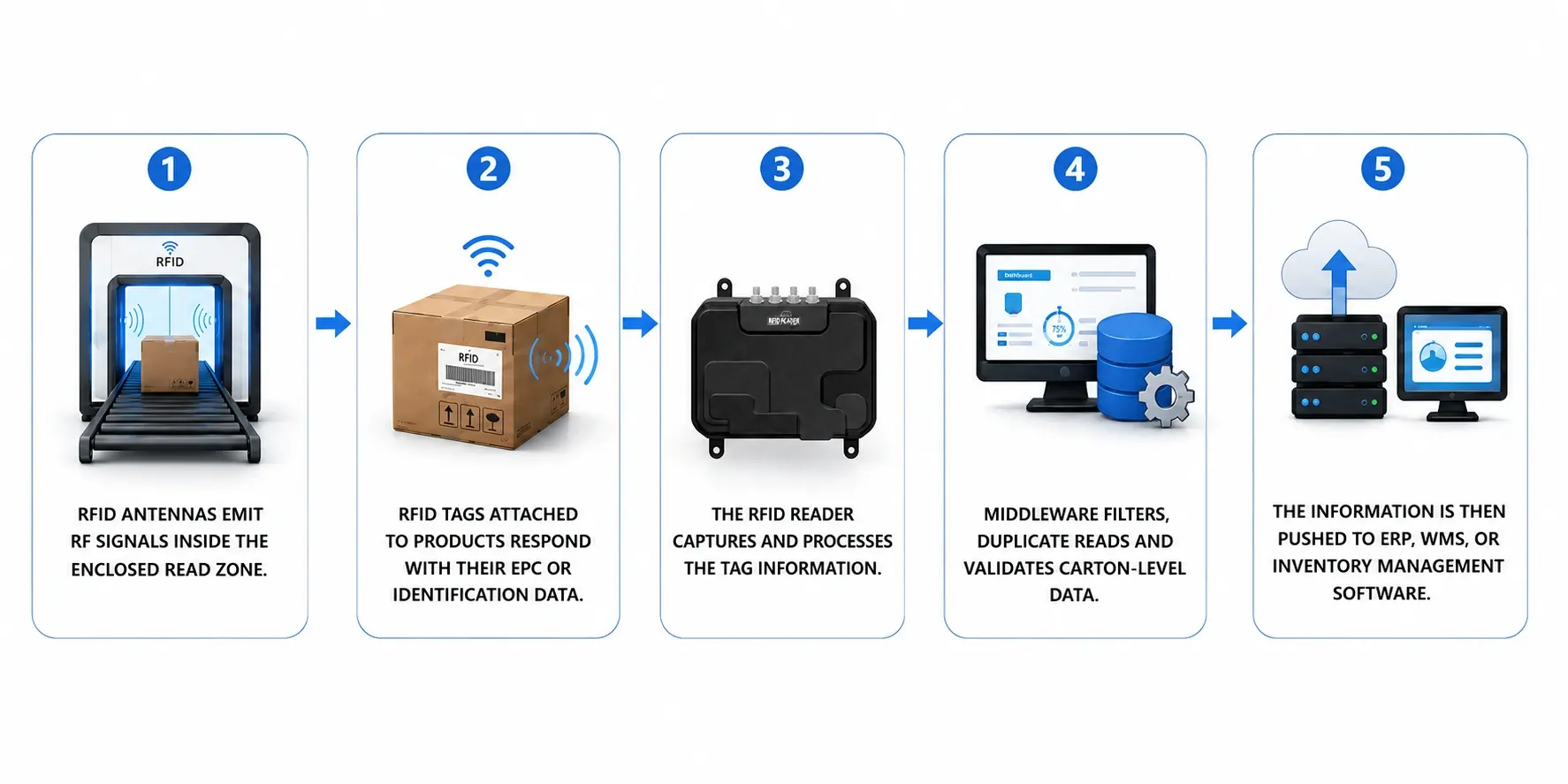
- RFID antennas emit RF signals inside the enclosed read zone.
- RFID tags attached to products respond with their EPC or identification data.
- The RFID reader captures and processes the tag information.
- Middleware filters duplicate reads and validates carton-level data.
- The information is then pushed to ERP, WMS, or inventory management software.
The enclosed structure helps reduce RF interference and stray reads from nearby cartons or inventory outside the tunnel.
For deployments requiring optimized performance, the system can be integrated with high-performance RFID Readers and industrial-grade RFID Antennas depending on the operational environment.
Designed Around Real Warehouse Movement
The IDT RFID Tunnel System is designed around actual warehouse movement and conveyor workflows.
Key design features include:
- Fully enclosed tunnel structure for controlled RF performance
- Support for standard conveyor widths (~500–800 mm)
- Minimal changes to existing conveyor lines
- Optimized tunnel dimensions for carton movement
- Easy integration with warehouse automation systems
The solution can work in:
- Manual conveyor environments
- Semi-automated warehouse lines
- Fully automated conveyor systems
This allows businesses to automate RFID validation without major infrastructure changes.
RF Control & Shielding
One of the biggest challenges in bulk RFID scanning is preventing unwanted or stray tag reads.
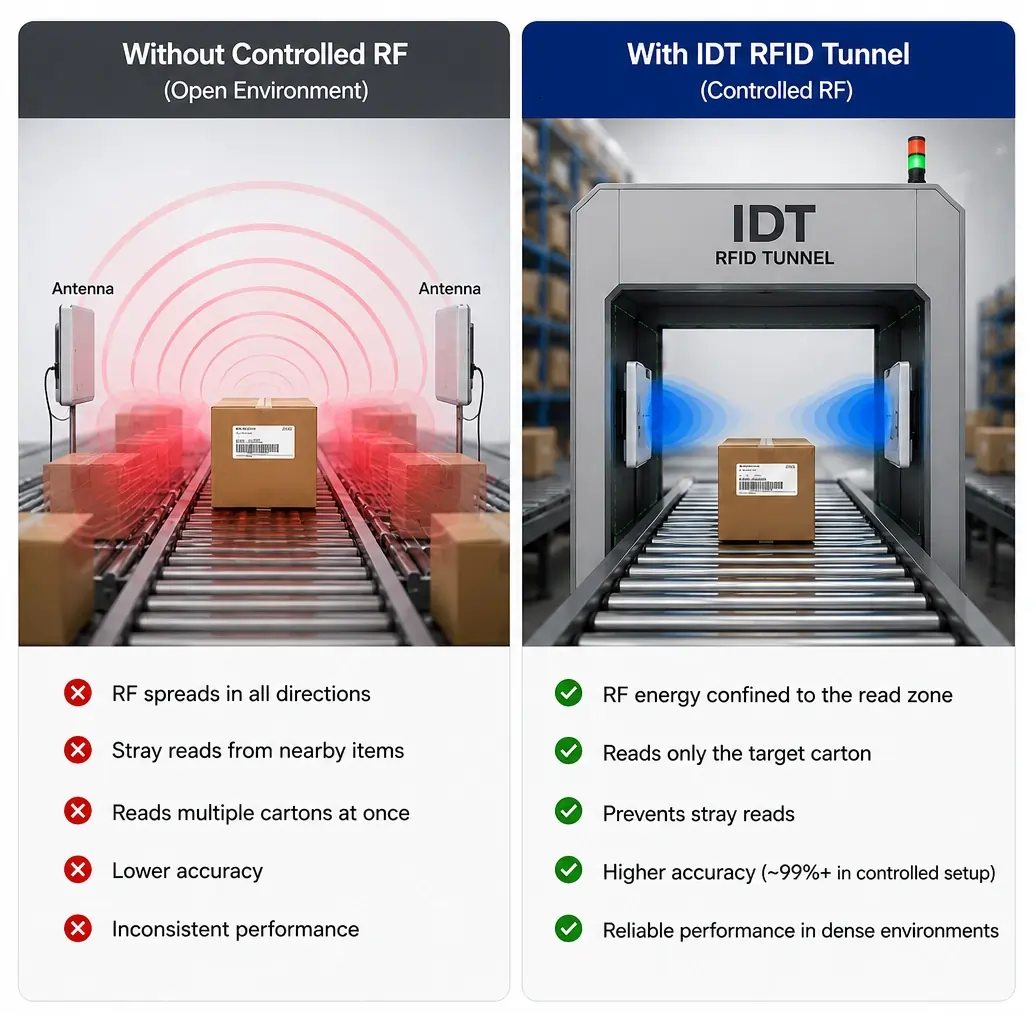
The IDT RFID Tunnel uses controlled RF shielding and enclosure-based architecture to improve read consistency and carton-level accuracy.
Key RF optimization features include:
- Enclosed tunnel design to reduce RF leakage
- Controlled read zone for better carton association
- Reduced cross-reading from nearby inventory
- Improved read reliability in dense warehouse environments
This becomes especially important in conveyor-based operations where cartons move close together.
System Performance in Bulk Operations
Based on tunnel configuration and testing conditions, the system is designed to support:
- Bulk reading of up to 100 RFID-tagged items per carton
- Continuous high-speed conveyor scanning
- Read accuracy close to 99%+ in controlled environments
- Real-time validation without stopping conveyor movement
Actual performance depends on factors such as:
- RFID tag quality
- Tag placement and orientation
- Product material composition
- Presence of metal or liquid items
- Carton spacing and density
Proper antenna placement and tunnel tuning are important for achieving the best read performance.
Applications of RFID Tunnel Readers
RFID tunnel systems can be deployed across multiple industries for automated bulk tracking and inventory verification.
Benefits of RFID Tunnel Systems
By using RFID tunnel readers, businesses can improve operational efficiency and reduce manual dependency.
Key benefits include:
- Faster bulk item processing
- Reduced manual scanning effort
- Better inventory accuracy
- Real-time item visibility
- Automated dispatch validation
- Continuous conveyor movement
- Reduced operational delays
- Improved warehouse traceability
A Step Towards Automated Inventory Validation
The IDT RFID Tunnel Reader is not only designed for faster scanning, but also for real-time automated inventory validation during warehouse movement.
Instead of checking inventory after operations are completed, businesses can validate goods while cartons are moving through the conveyor itself.
This enables:
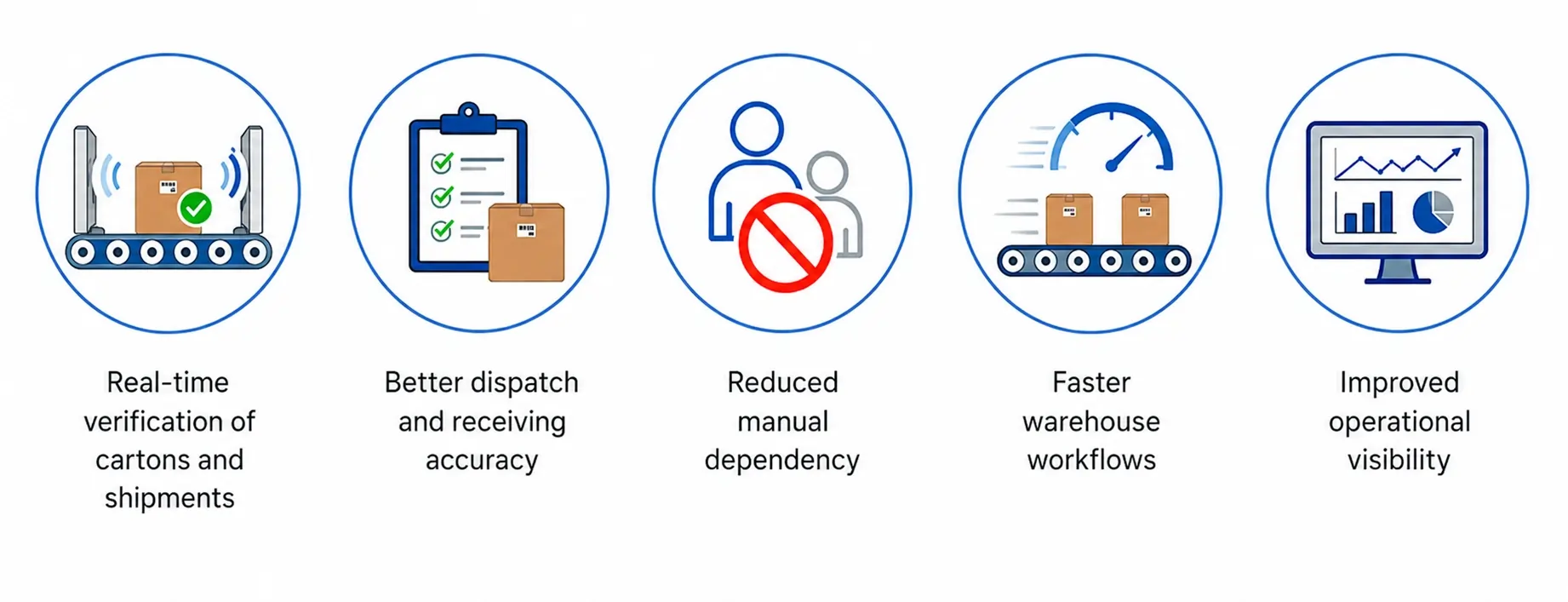
As warehouses and logistics operations continue moving toward automation, RFID tunnel systems are becoming an important part of modern inventory and supply chain infrastructure.