Metal assets are among the most valuable resources in industries like manufacturing, logistics, healthcare, construction, and oil & gas. However, tracking them accurately has always been a challenge. Traditional RFID tags often perform poorly when attached directly to metal because the metal surface interferes with radio frequency signals, leading to shorter read ranges and inconsistent performance.
This is where a mount on metal tag makes a difference. These specially designed RFID tags are engineered to work reliably on metallic surfaces, delivering consistent read performance even in demanding industrial environments. Whether you’re tracking machinery, tools, returnable transport items, or IT assets, mount-on-metal RFID tags provide a smarter and more efficient way to manage assets throughout their lifecycle.
Within this article, we examine the mechanics of high-performance mount-on-metal RFID tags, highlight their essential characteristics, and identify the leading sectors utilizing this technology to bolster asset tracking and streamline operations.
What Are High Performance Mount on Metal RFID Tags?
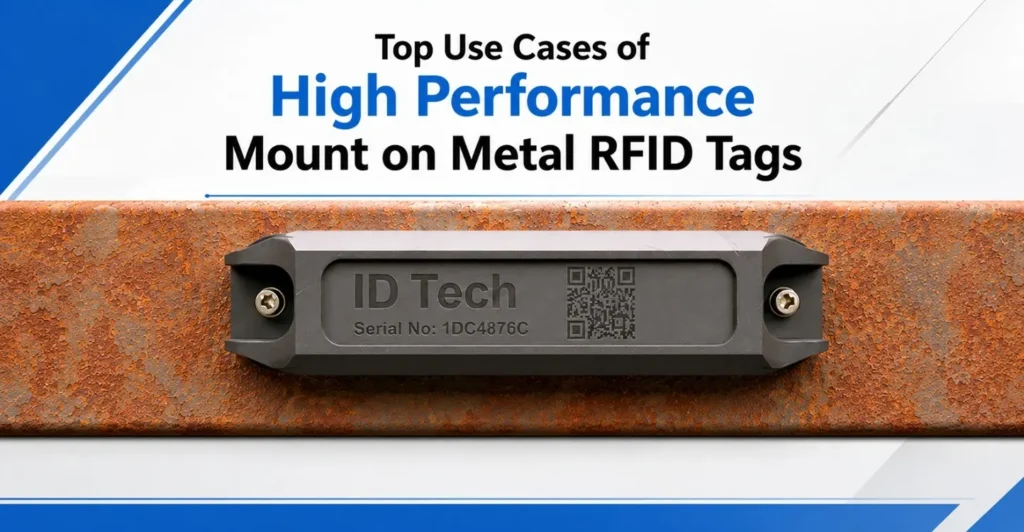
High performance mount on metal RFID tags are specially designed to deliver reliable tracking of metallic assets where standard RFID tags often fail. Their metal design minimizes signal interference, ensuring consistent read performance even when attached directly to metal surfaces.
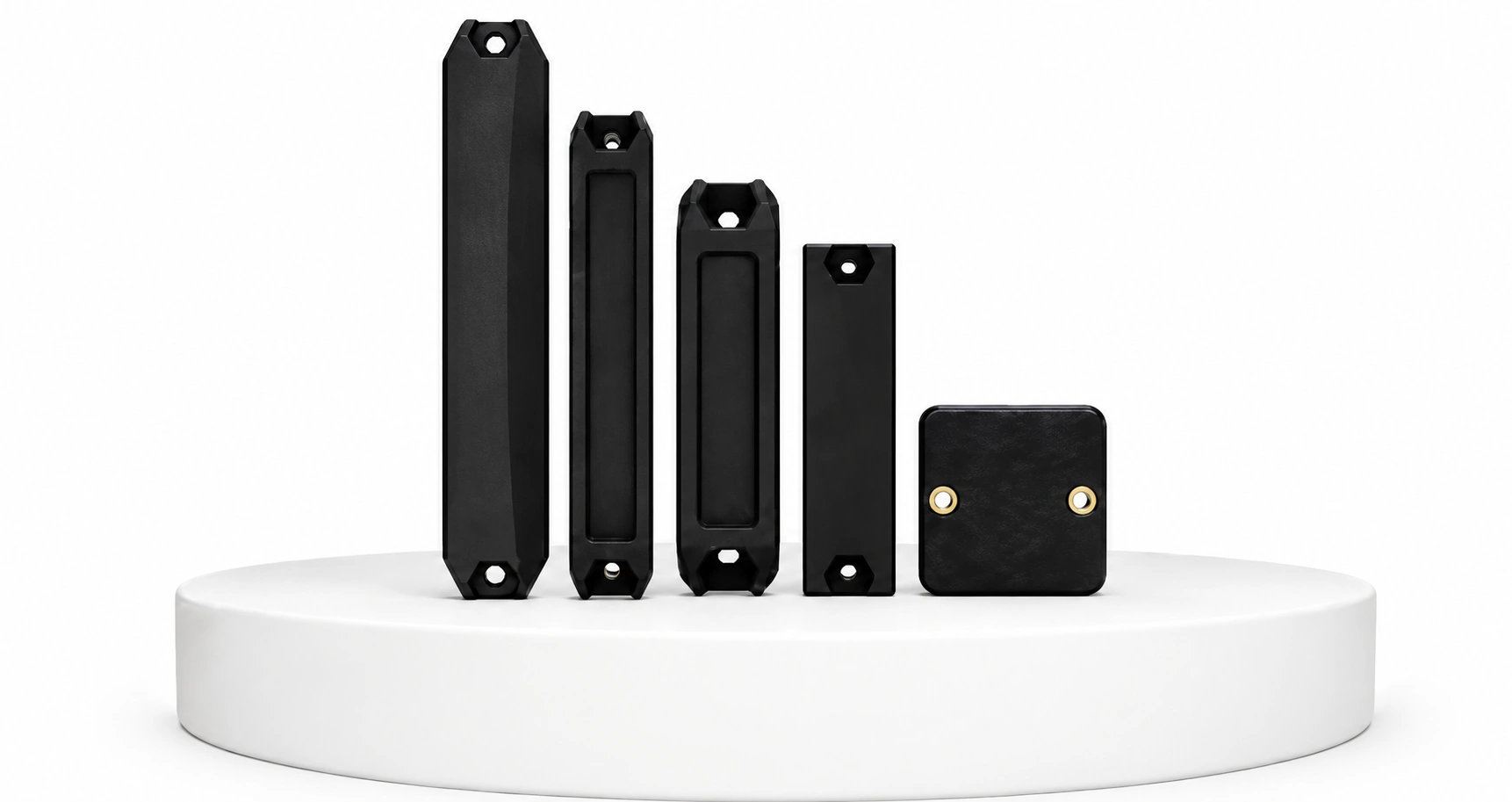
ID Tech’s Ferric Series consists of passive RAIN RFID hard tags operating in 865–868 MHz (ETSI) and 902–928 MHz (FCC) frequency bands. Available with Alien Higgs-9, Impinj M700/M800 Series, and NXP UCODE 9 chips, the series includes multiple tag sizes for applications such as machinery, industrial equipment, returnable transport units (RTUs), and supply chain asset tracking.
Built for harsh industrial environments, the Ferric Series combines rugged construction, reliable on metal performance, and long read ranges, making it an ideal choice for industrial asset tracking.
Why Standard RFID Tags Fail on Metal Surfaces
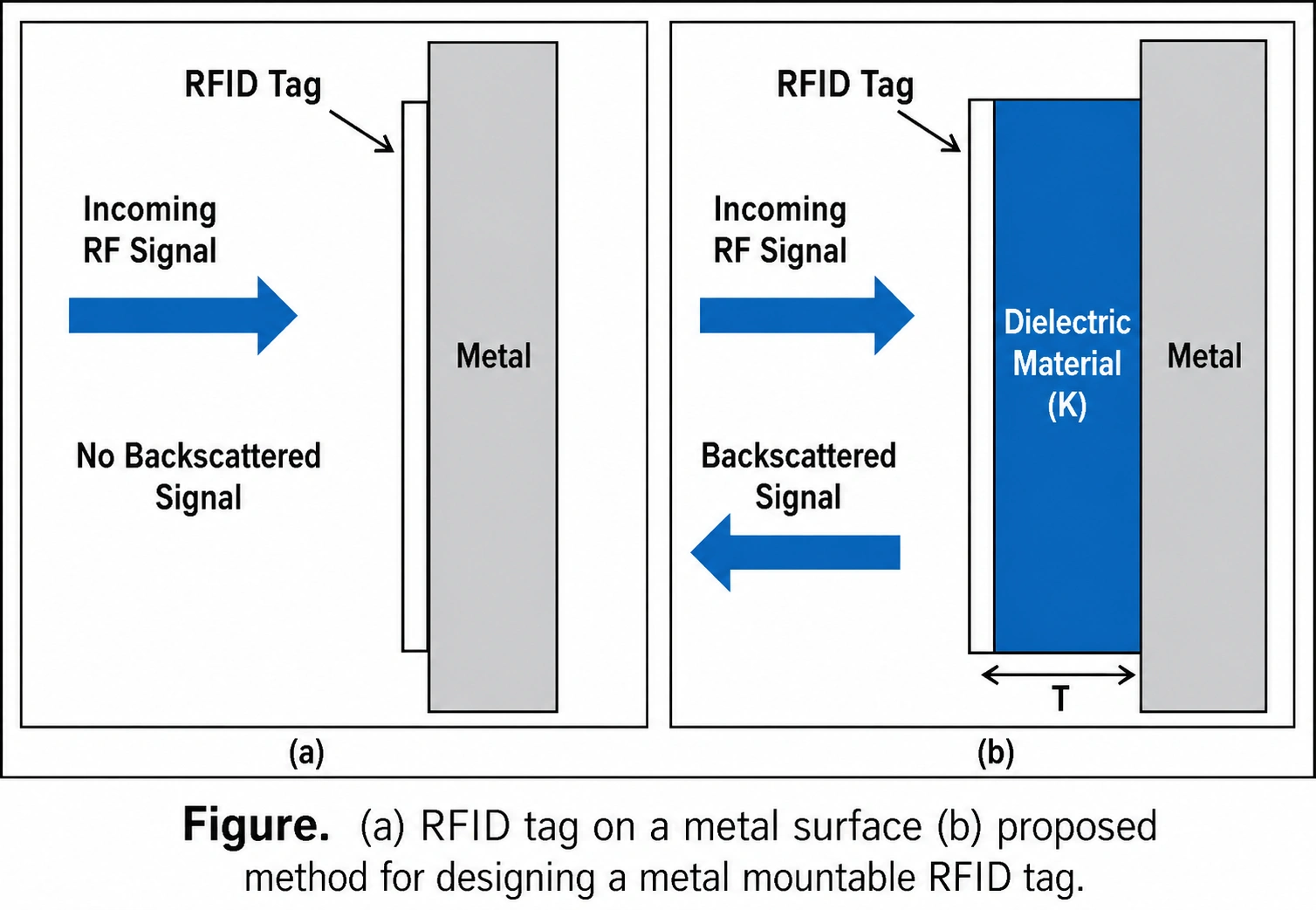
Standard RFID tags are designed for non-metallic materials such as cardboard, plastic, or paper. When they are placed directly on metal, the radio waves are reflected or absorbed, reducing reading accuracy and making the tag difficult to detect.
High-performance RFID tags for metal surfaces solve this problem by using specially engineered antenna designs and insulating materials that maintain consistent communication between the RFID reader and the tag.
As a result, organizations achieve faster asset identification, higher read accuracy, and improved inventory visibility.
Key Features of High Performance RFID Tag Metal Solutions
Designed for Metal Environments
These tags are optimized specifically for metallic assets, ensuring reliable performance where conventional RFID tags fail.
Long Read Range
Depending on the reader, antenna, and installation environment, high-performance tags can deliver read ranges of up to 12 metres, enabling faster inventory audits and automated asset tracking.
Rugged Construction
Industrial environments expose tags to dust, moisture, vibration, chemicals, and high temperature. Hard mount-on-metal tags are designed to withstand these conditions while maintaining long-term performance.
Flexible Installation
Depending on the application, tags can be attached using screws, rivets, industrial adhesives, magnets, or cable ties. Printable on-metal RFID labels are also available for flat or slightly curved metallic surfaces.
Compatible with Existing RFID Systems
Most mount-on-metal tags comply with global RAIN RFID standards and work seamlessly with standard RFID readers, handheld devices, fixed readers, and RFID software.
Top Use Cases of Mount on Metal RFID Tags
Manufacturing Asset Tracking
Manufacturers use RFID asset tracking tags to monitor tools, moulds, machines, and production equipment. Real-time visibility reduces manual tracking, prevents asset loss, and improves maintenance planning.
Warehouse and Logistics
Metal pallets, roll cages, containers, and returnable transport items can be automatically identified as they move through warehouses. RFID reduces manual scanning and improves inventory accuracy.
Oil and Gas Industry
Equipment used in oil and gas operations is often exposed to harsh environments. Mount-on-metal RFID tags help track pipes, valves, cylinders, drilling equipment, and maintenance history with minimal human intervention.
Construction Equipment Tracking
Construction companies use RFID tags to monitor expensive equipment, scaffolding, metal tools, and machinery across multiple project sites, reducing losses and improving equipment utilization.
Automotive Manufacturing
Automotive manufacturers use RFID tags for metal objects to track engines, chassis, reusable containers, and production tooling throughout the manufacturing process, improving traceability and production efficiency.
Healthcare Asset Management
Hospitals use on-metal RFID labels to identify wheelchairs, infusion pumps, medical equipment, and IT assets. This improves equipment availability while reducing time spent searching for critical assets.
Retail and IT Asset Tracking
Retail chains and corporate offices use RFID tag metal solutions to manage servers, laptops, networking devices, storage racks, and other valuable IT assets, enabling faster audits and better asset control.
How to Choose the Right Mount on Metal RFID Tag
Selecting the right RFID tag depends on your application.
Consider the following factors before choosing a tag:
- Size of the metal asset
- Required read range
- Indoor or outdoor deployment
- Temperature and environmental conditions
- Mounting method (adhesive, screw, rivet, or magnet)
- RFID chip compatibility
- Frequency regulations (ETSI or FCC)
For industrial applications requiring rugged performance, hard tags are generally preferred, while printable on-metal labels are ideal for IT assets, medical equipment, and office environments.
Why Choose ID Tech Mount-on-Metal RFID Tags?
ID Tech offers a comprehensive range of passive RAIN RFID mount-on-metal solutions designed for industrial asset tracking applications.
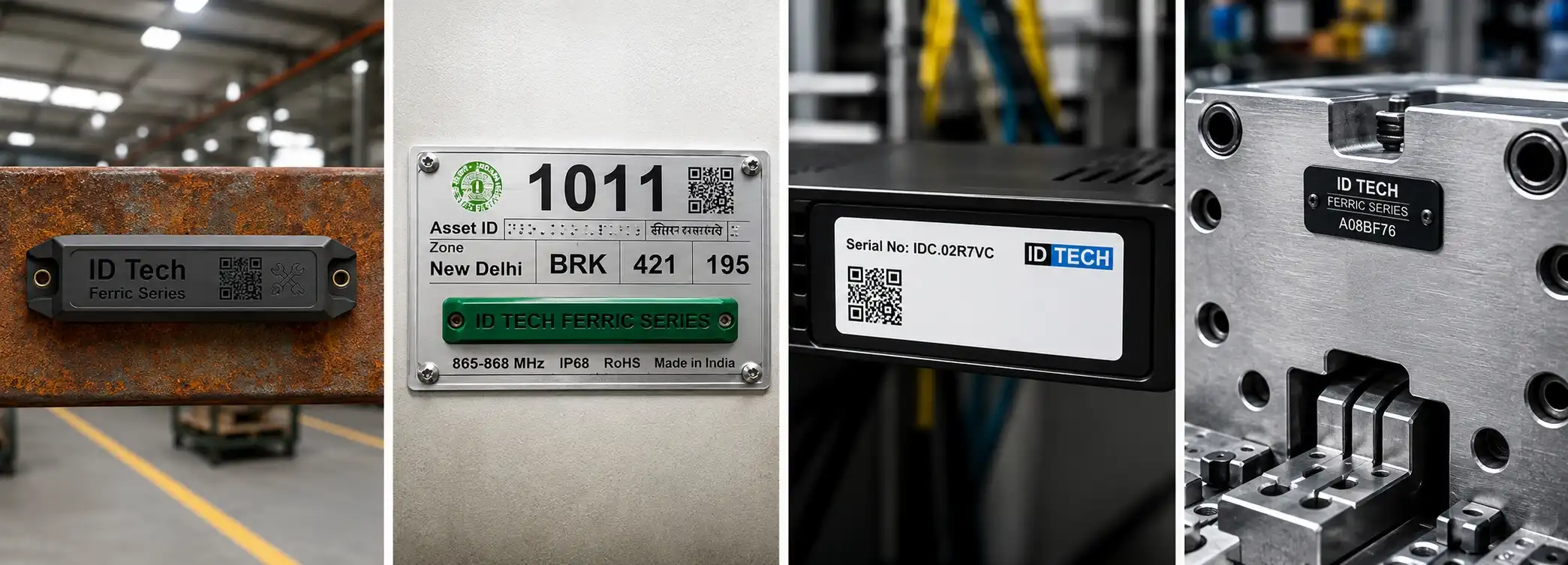
The Ferric Series includes rugged hard tags available in multiple sizes, supporting applications such as machinery tracking, returnable transport units, supply chain management, and industrial equipment identification. Depending on the model, these tags support read ranges of up to 12 metres and are available with leading RFID chips including Alien Higgs-9, Impinj M700/M800 Series, and NXP UCODE 9.
For compact applications, ID Tech also offers printable Mount-on-Metal Slim Labels and Wide Labels, making them suitable for IT assets, hospitals, manufacturing facilities, and automotive industries.
With flexible mounting options and compatibility with standard RAIN RFID infrastructure, these tags provide reliable performance across a wide range of industrial environments.
Frequently Asked Questions
Are mount-on-metal RFID tags reusable?
Yes. Hard RFID mount-on-metal tags are reusable and can often be removed and installed on other assets, depending on the mounting method.
What is the typical read range of mount-on-metal RFID tags?
Read range depends on the tag, reader, antenna, and environment. High-performance tags can typically achieve read ranges of several metres, with some industrial tags supporting up to 12 metres.
Where are RFID tags for metal objects commonly used?
They are widely used in manufacturing, logistics, healthcare, construction, oil & gas, automotive, warehousing, and IT asset management.
Which RFID tags work best on metal assets?
On-metal (metal-mount) RFID tags are specifically designed for metal surfaces. They use a spacer and optimized antenna design to deliver reliable performance on metallic objects.
How are RFID tags attached to metal objects?
Depending on the application, tags can be attached using screws, rivets, industrial adhesive, epoxy, welding, embedding, or zip ties.
Can RFID tags be embedded inside metal objects?
Yes, but only if part of the tag remains exposed for RF communication. Fully enclosed metal blocks RFID signals, making the tag unreadable.
Can on-metal RFID tags withstand harsh environments?
Yes. Rugged on-metal RFID tags are designed to resist moisture, impact, chemicals, and extreme temperatures, making them ideal for industrial use.
Do on-metal RFID tags work on all types of metal?
Yes. They are compatible with most common metals, including steel, aluminum, iron, copper, and titanium.
Which industries commonly use metal-mount RFID tags?
Industries such as manufacturing, automotive, healthcare, aerospace, oil & gas, IT asset management, and logistics widely use on-metal RFID tags.
What assets are typically tagged with on-metal RFID tags?
Common applications include tools, machinery, laptops, servers, medical equipment, vehicles, pipes, oil drums, kegs, returnable containers, and metal components.
Conclusion
Metal assets are often the most valuable and the hardest to track accurately. Choosing the right mount on metal tag ensures reliable performance, faster inventory audits, and complete visibility of assets across their lifecycle, even in challenging industrial environments.
From manufacturing and logistics to healthcare, construction, and oil & gas, RFID tags for metal surfaces help businesses reduce manual effort, improve asset utilization, and make informed operational decisions.
If you’re planning to implement an RFID-based asset tracking system, ID Tech’s Ferric Series offers a range of rugged, high-performance mount-on-metal RFID tags designed for dependable on-metal performance. Contact our RFID experts to find the right tag for your application and deployment requirements.