Warehouses today are under constant pressure to process more orders, maintain accurate inventory, and deliver products faster than ever before. As supply chains become increasingly complex, relying on manual processes or barcode scanning alone is no longer enough to keep operations efficient. Businesses are now looking for smarter technologies that provide real-time visibility and reduce operational costs.
This is where RFID (Radio Frequency Identification) is transforming warehouse management operations. Unlike traditional barcode systems, RFID can identify and track multiple items simultaneously without requiring a direct line of sight. Modern RFID Warehouse Management solutions help businesses automate inventory tracking, improve warehouse visibility, and streamline receiving, picking, and shipping processes. From receiving goods to dispatching orders, RFID enhances inventory accuracy, operational efficiency, and overall warehouse productivity.
In this guide, we’ll explore how RFID works in warehouses, the challenges it solves, its benefits over barcode systems, and why more organizations are investing in RFID Inventory Management.
How RFID Works in Warehouse Inventory Management
RFID technology uses radio waves to identify and track tagged items automatically. A typical RFID solution consists of RFID tags or labels attached to products, RFID readers installed at key checkpoints, antennas, and software that integrates with a Warehouse Management System (WMS) or ERP.
For warehouse applications, businesses commonly deploy fixed readers such as the UHF Integrated Reader IDT-87 IN for dock doors and warehouse portals, or the UHF RFID 4-Port Reader IDT-401 C (Android 13) where multiple antennas are required to cover larger storage areas. These readers work with the IDT UHF RFID 9dBi Circular Polarization Antenna to deliver reliable tag reading across racks, conveyors, and receiving zones.
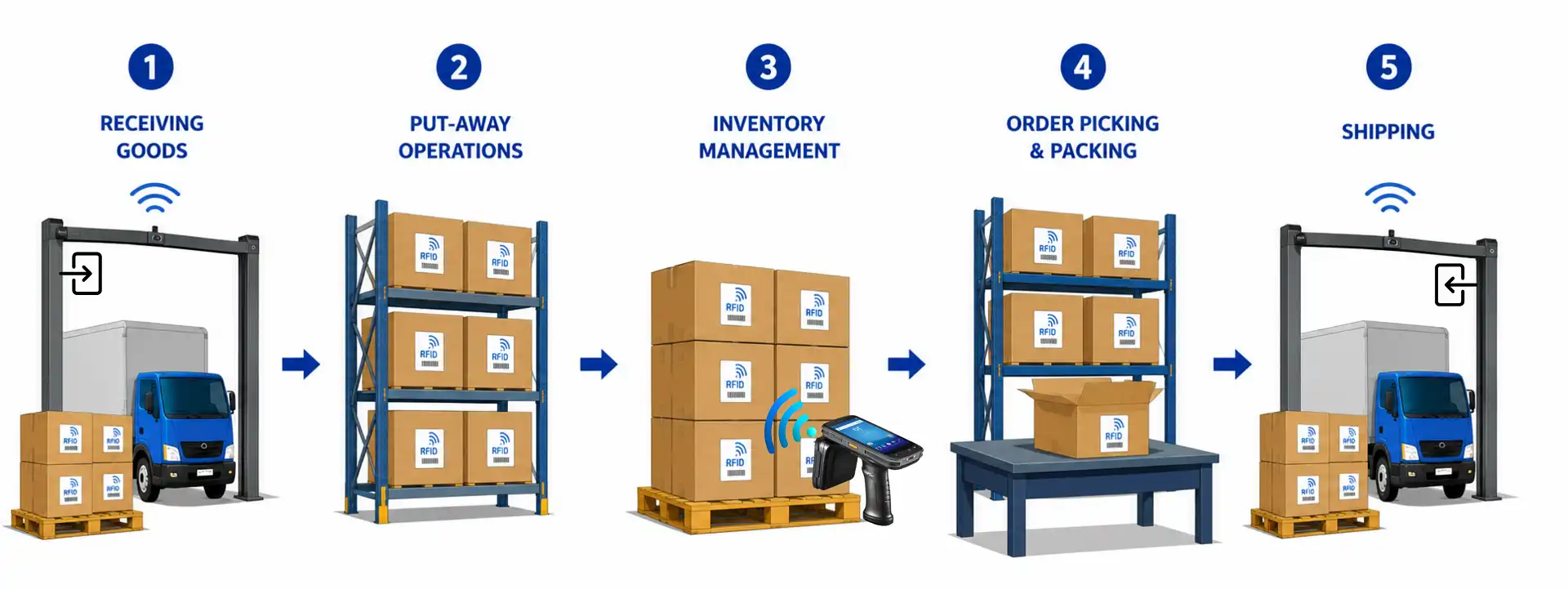
Here’s how RFID supports daily warehouse operations:
Receiving Goods
As products arrive at the warehouse, RFID-tagged cartons or pallets pass through fixed RFID portals where they are identified automatically. Solutions such as the UHF RFID Gate Reader capture multiple tagged items simultaneously without manual scanning, instantly updating inventory records and reducing receiving time.

Put-away Operations
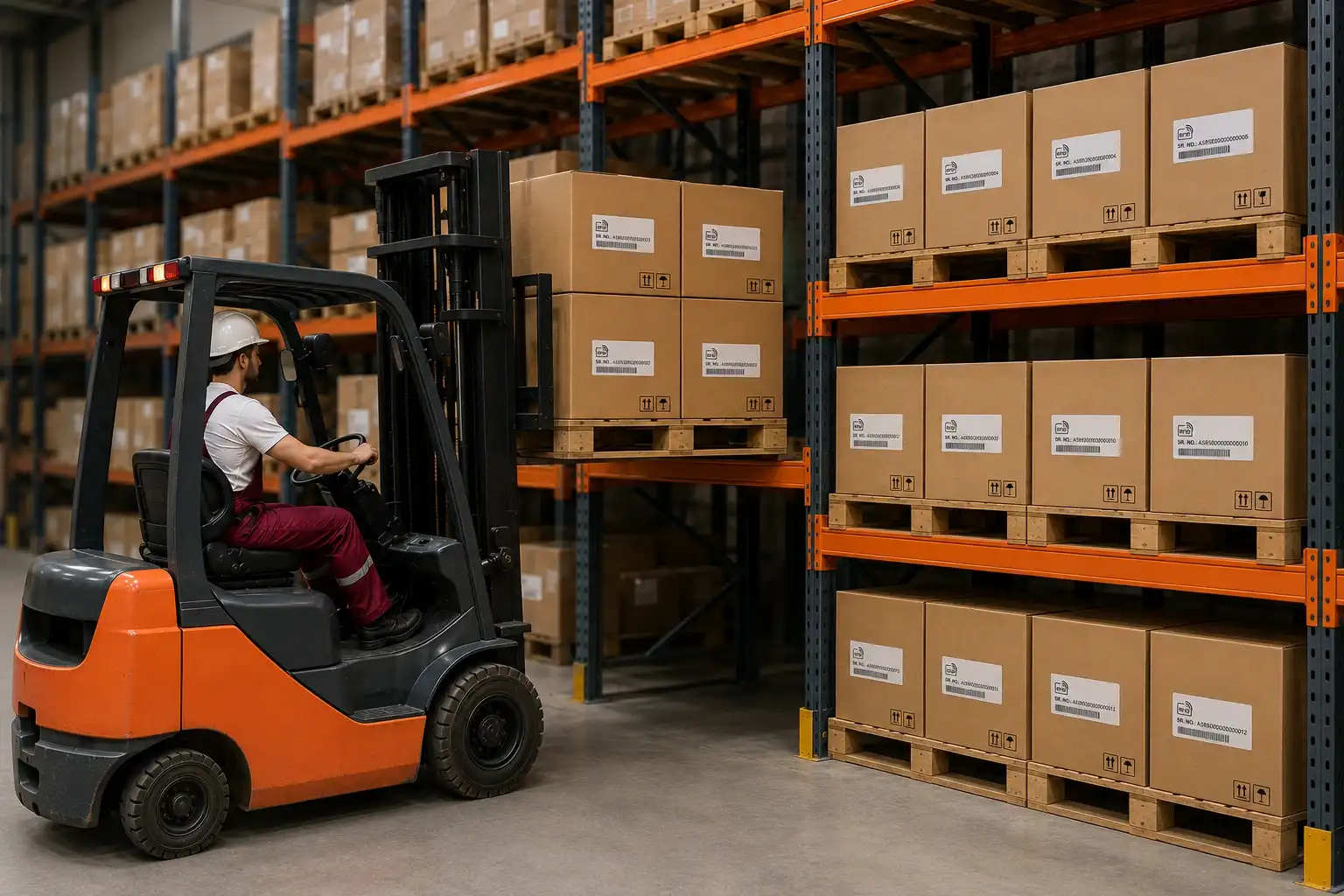
During storage, handheld or vehicle-mounted RFID readers verify that inventory is placed in the correct rack or storage location, reducing placement errors and improving warehouse organization. Real-time validation ensures products are always stored in their designated locations.
Inventory Management
Unlike manual stock counting, RFID enables fast cycle counts by reading hundreds of items within seconds. Warehouse staff can perform audits without interrupting daily operations, significantly improving inventory visibility.
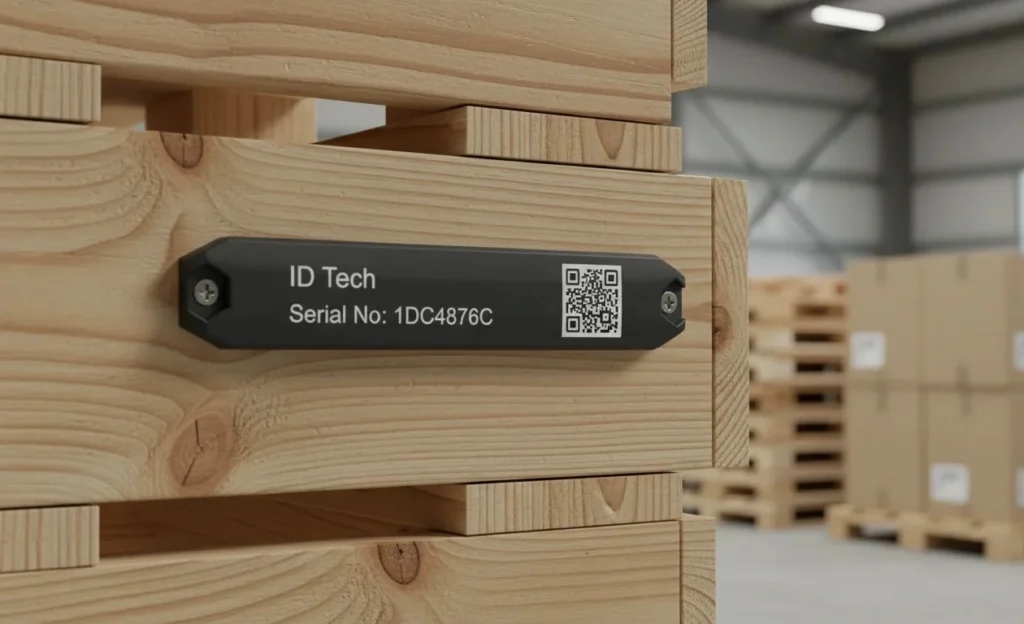
Depending on the application, businesses can choose Mount on Metal Tags & Labels for metallic assets, racks, and reusable containers, while Strip / Pallet Tags are ideal for pallets, cartons, and warehouse inventory moving through the supply chain.
Order Picking and Packing
RFID helps workers locate products quickly and verifies that the correct items are picked before packing. This reduces fulfillment errors, shortens picking time, and improves customer satisfaction.
Shipping
Before shipments leave the warehouse, RFID portals automatically validate outgoing inventory, ensuring order accuracy while maintaining complete shipment records.

By automating these processes, RFID minimizes manual effort while improving speed and operational efficiency across the warehouse.
Major Challenges in Traditional Warehouse Management Operations
Many warehouses still rely heavily on manual processes and barcode scanning, which become increasingly inefficient as inventory volumes grow.
One of the biggest challenges is limited inventory visibility. Employees often spend valuable time searching for misplaced inventory or performing manual stock verification. This delays operations and impacts customer service.
Barcode-based systems also require individual scanning of each item, making receiving, picking, and shipping time-consuming. Human errors during data entry or scanning can lead to inventory discrepancies, incorrect shipments, and increased operational costs.
Traditional warehousing and inventory management also struggles with labor-intensive cycle counting, delayed inventory updates, and limited traceability. Without real-time visibility, managers often make decisions based on outdated inventory information, resulting in stock shortages or excess inventory.
Benefits of RFID in Warehousing and Inventory Management
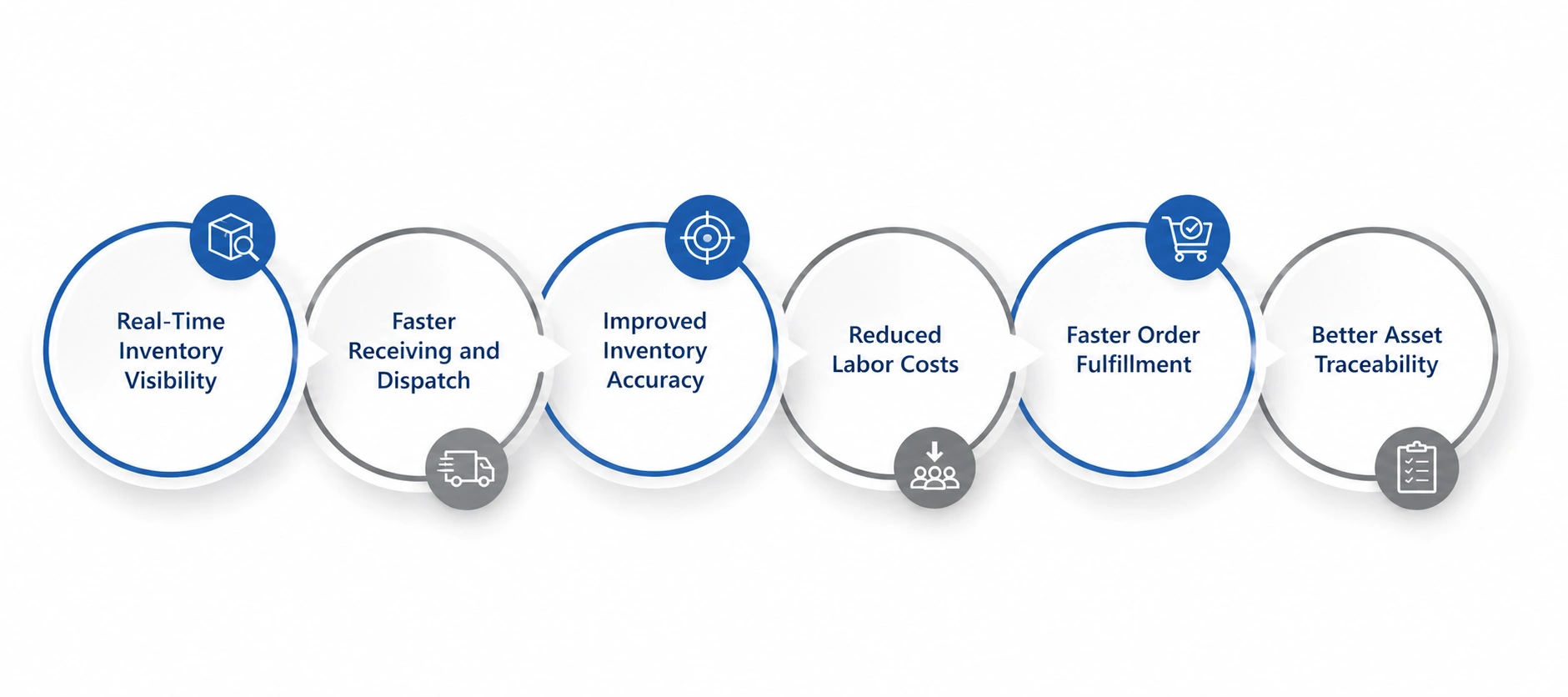
RFID offers significant advantages for organizations looking to modernize their warehouse inventory management processes. By combining industrial-grade readers, antennas, and RFID tags, businesses can automate inventory movement from receiving to dispatch while maintaining complete visibility across warehouse operations.
Real-Time Inventory Visibility
RFID provides instant visibility into inventory movement throughout the warehouse. Managers always know where products are located, improving decision-making and reducing search time.
Faster Receiving and Dispatch
Since RFID can read multiple tags simultaneously, receiving and shipping operations become significantly faster than barcode-based processes using fixed readers like the IDT-87 IN and UHF RFID Gate Reader.
Improved Inventory Accuracy
Automated data capture reduces manual errors and helps warehouses achieve inventory accuracy levels above 99% when implemented correctly.
Reduced Labor Costs
Routine tasks such as inventory counting, item verification, and shipment validation require less manual effort, allowing employees to focus on higher-value activities.
Faster Order Fulfillment
With accurate inventory information and quicker product identification, warehouses can reduce picking errors and improve delivery timelines.
Better Asset Traceability
RFID records every movement of tagged inventory, creating a complete audit trail that supports compliance, security, and operational transparency.
RFID vs. Barcode Systems: Which Technology Is Better?
Barcode technology has served warehouses for decades and remains an effective solution for many applications. However, as warehouse operations become larger and more automated, RFID offers several advantages.
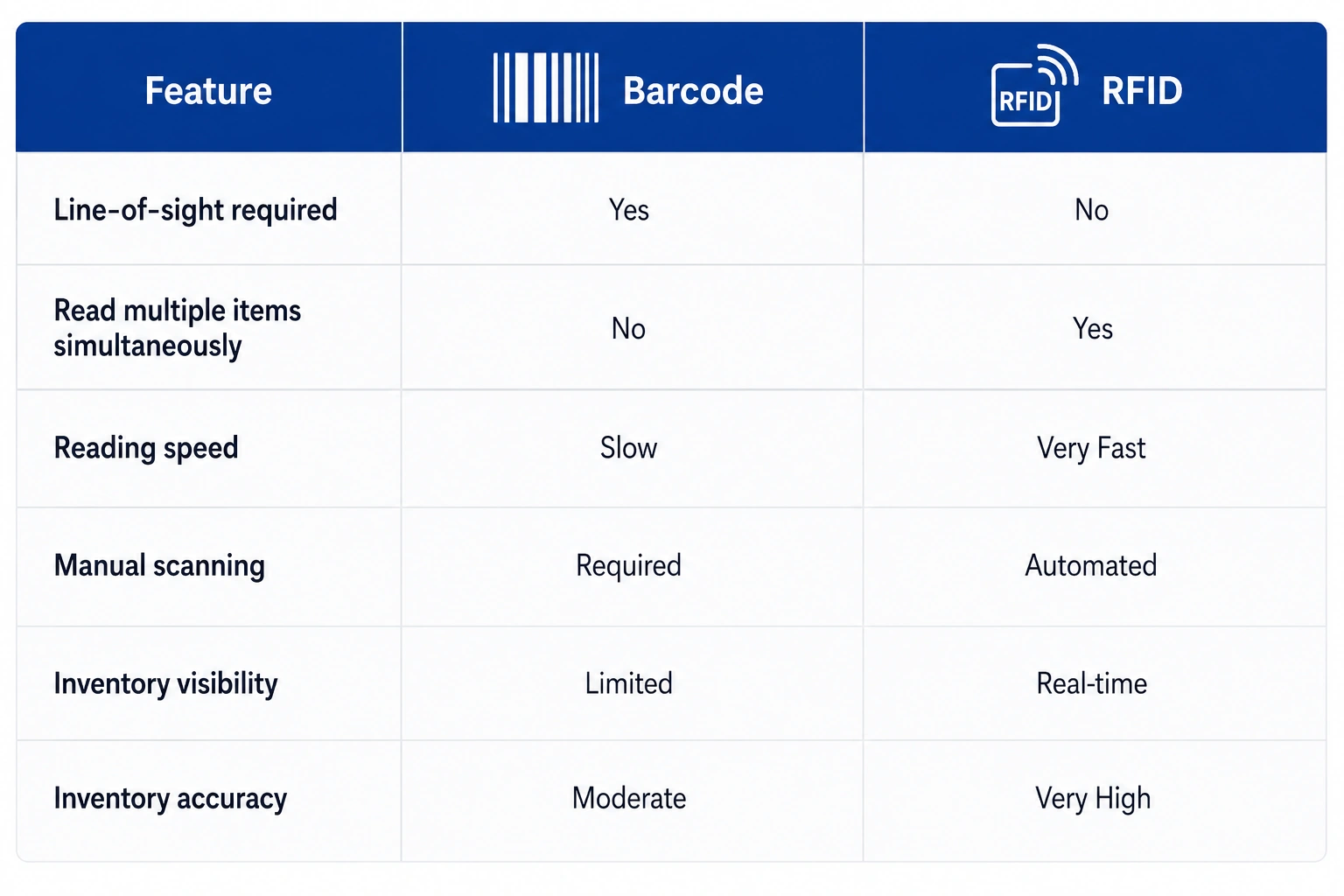
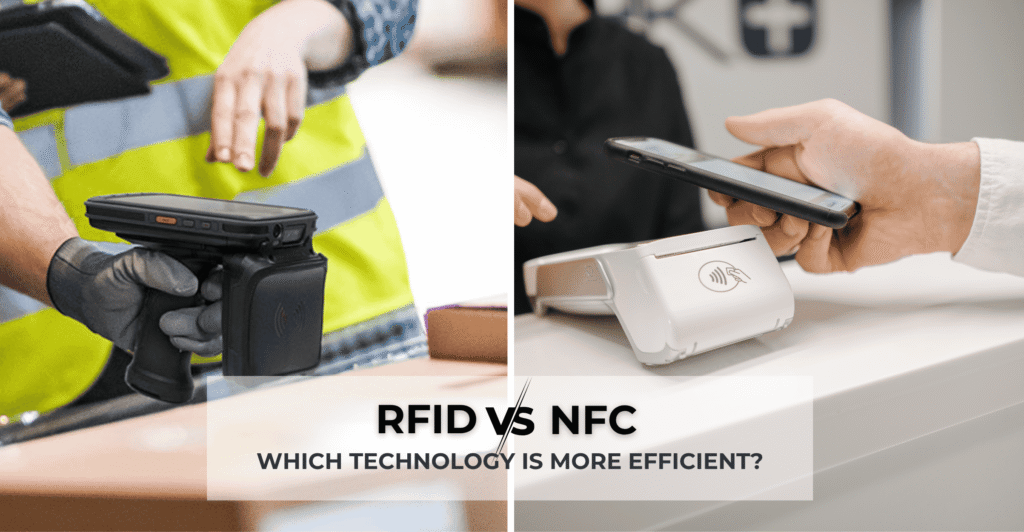
Barcodes are generally less expensive and suitable for smaller operations with limited inventory volumes. However, they depend heavily on manual scanning, which increases labor requirements and the likelihood of human error.
RFID enables automatic identification without direct visibility, making it ideal for warehouses handling thousands of products daily. Businesses implementing RFID Inventory Management often experience faster receiving, improved inventory accuracy, reduced operational costs, and greater supply chain visibility.
For many organizations, a hybrid approach that combines barcode and RFID technologies provides the best balance between cost and automation.
How RFID Solves the Biggest Warehouse Operations Challenges
Modern warehouses face increasing pressure to improve efficiency while reducing operational costs. RFID directly addresses many of these challenges.
Instead of manually searching for inventory, warehouse staff can locate tagged items within seconds using handheld RFID readers. Automated receiving eliminates lengthy scanning processes, while real-time inventory updates reduce stock discrepancies.
RFID also improves warehouse productivity by enabling rapid cycle counts without interrupting normal operations. Managers gain accurate inventory information that supports better purchasing decisions and minimizes stock shortages.
For businesses using an operations warehouse management system, RFID integrates seamlessly with existing software, automatically updating inventory records as products move through receiving, storage, picking, and shipping.
The technology also enhances security by creating a digital history of every inventory movement, making it easier to investigate missing items or monitor high-value assets.
Ready to Revolutionize Your Warehouse?
Whether you operate a manufacturing facility, distribution center, retail warehouse, or third-party logistics business, RFID can significantly improve operational efficiency while reducing manual effort.
At ID Tech Solutions, we provide end-to-end RFID Warehouse Management solutions tailored to modern warehouse environments. Our portfolio includes high-performance hardware such as the UHF Integrated Reader IDT-87 IN, UHF RFID 4-Port Reader IDT-401 C (Android 13), UHF RFID Gate Reader, and the IDT UHF RFID 9dBi Circular Polarization Antenna. We also offer durable Mount on Metal Tags & Labels and Strip / Pallet Tags designed for warehouse inventory, pallets, reusable containers, and industrial assets.
From pilot projects to enterprise-scale deployments, our experts help organizations select the right RFID hardware, integrate it with their existing WMS or ERP, and build scalable warehouse automation solutions that improve inventory visibility, operational accuracy, and long-term productivity.
Ready to transform your warehouse? Contact ID Tech ([email protected]) today to schedule a consultation and discover how RFID can streamline your warehouse management operations.
Frequently Asked Questions
1. What is RFID Inventory Management?
RFID Inventory Management uses RFID tags, readers, antennas, and software to automatically identify, track, and manage inventory in real time, reducing manual effort while improving inventory accuracy and warehouse visibility.
2. What is the cost of implementing RFID in a warehouse?
The cost depends on warehouse size, the number of RFID readers and tags required, software integration, and deployment complexity. Most organizations begin with a pilot project before expanding across their facility.
3. Which industries benefit most from RFID warehouse solutions?
Retail, manufacturing, automotive, pharmaceuticals, healthcare, logistics, e-commerce, and third-party logistics providers all benefit from improved inventory visibility, operational efficiency, and accurate warehouse inventory management.
4. How long does it take to deploy an RFID system?
Deployment timelines vary depending on warehouse size and project scope. A pilot implementation may take a few weeks, while enterprise-wide deployments typically require several months.
5. How accurate is RFID inventory tracking?
A properly designed RFID solution can achieve inventory accuracy above 99%, significantly reducing discrepancies compared to manual or barcode-only systems.
6. What types of RFID tags are used in warehouses?
Warehouses commonly use paper RFID labels, Mount on Metal RFID Tags, Strip / Pallet Tags, durable industrial tags, and reusable RFID labels depending on the products, assets, and operating environment.