One of the first questions people ask before investing in an RFID solution is, “How far can an RFID tag be read?” The answer isn’t always straightforward. While some RFID tags can be read from just a few centimeters away, others can be detected from over 100 meters, depending on the technology used.
RFID read range refers to the maximum distance between an RFID reader and an RFID tag at which the tag can still be detected and read successfully. Also referred to as RFID read distance, it is one of the most important factors to consider when selecting an RFID solution for applications such as warehouse management, toll collection, healthcare, manufacturing, logistics, and access control.
RFID read range is influenced by several factors, including the RFID frequency, tag type, reader power, antenna design, installation environment, and even the material the tag is attached to. Understanding these factors is essential for choosing the right RFID solution for your application.
In this guide, we’ll answer the 20 most common questions about RFID read range, explain what affects RFID reading distance, compare different RFID technologies, and share practical tips to help you achieve the best performance from your RFID system.
RFID Read Range
1. What is RFID read range?
RFID read range is the maximum distance between an RFID reader and an RFID tag at which the tag can be detected and read successfully. However, the actual RFID read range depends on the complete RFID system rather than the tag or reader alone.
It is also important to distinguish between the read range mentioned on a product specification sheet and the actual read range achieved in the field. Manufacturers usually specify performance under ideal testing conditions, whereas real-world performance depends on the reader, antenna, RFID tag, installation, and surrounding environment.
Rather than simply achieving the longest possible RFID reader distance, a well-designed RFID system focuses on reading tags accurately and consistently within the required read zone. For example, a warehouse portal may require a reliable read range of 5–8 meters, while a vehicle access control system may only need a few meters for accurate identification.
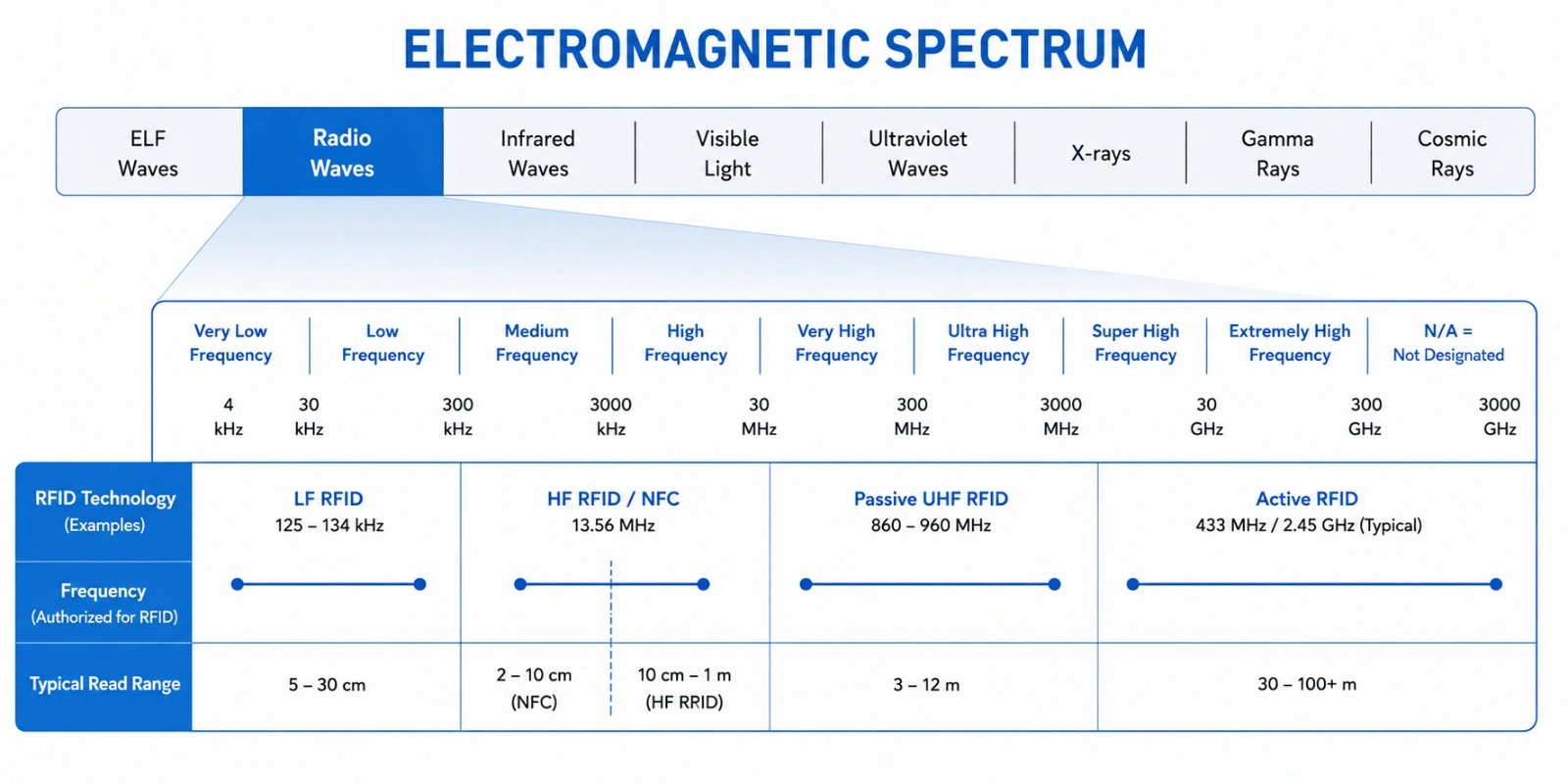
Typical RFID Read Range by Technology
2. What affects RFID reading distance?
Several factors influence RFID read range, including the RFID tag type, reader power, antenna gain, operating frequency, tag orientation, nearby materials, and environmental conditions.
The actual RFID read distance depends on the complete RFID system rather than a single component. Even with the same reader, changing the antenna, RFID tag, or installation environment can significantly affect the reading distance.
For example, a high-performance UHF RFID tag paired with a high-gain antenna may achieve a read range of over 10 meters under ideal conditions, while the same tag may perform differently if mounted on metal, placed near liquids, or installed in an environment with signal interference. This is why selecting the right combination of reader, antenna, and tag is essential for achieving reliable and consistent RFID performance.
3. What is the read range of LF RFID tags?
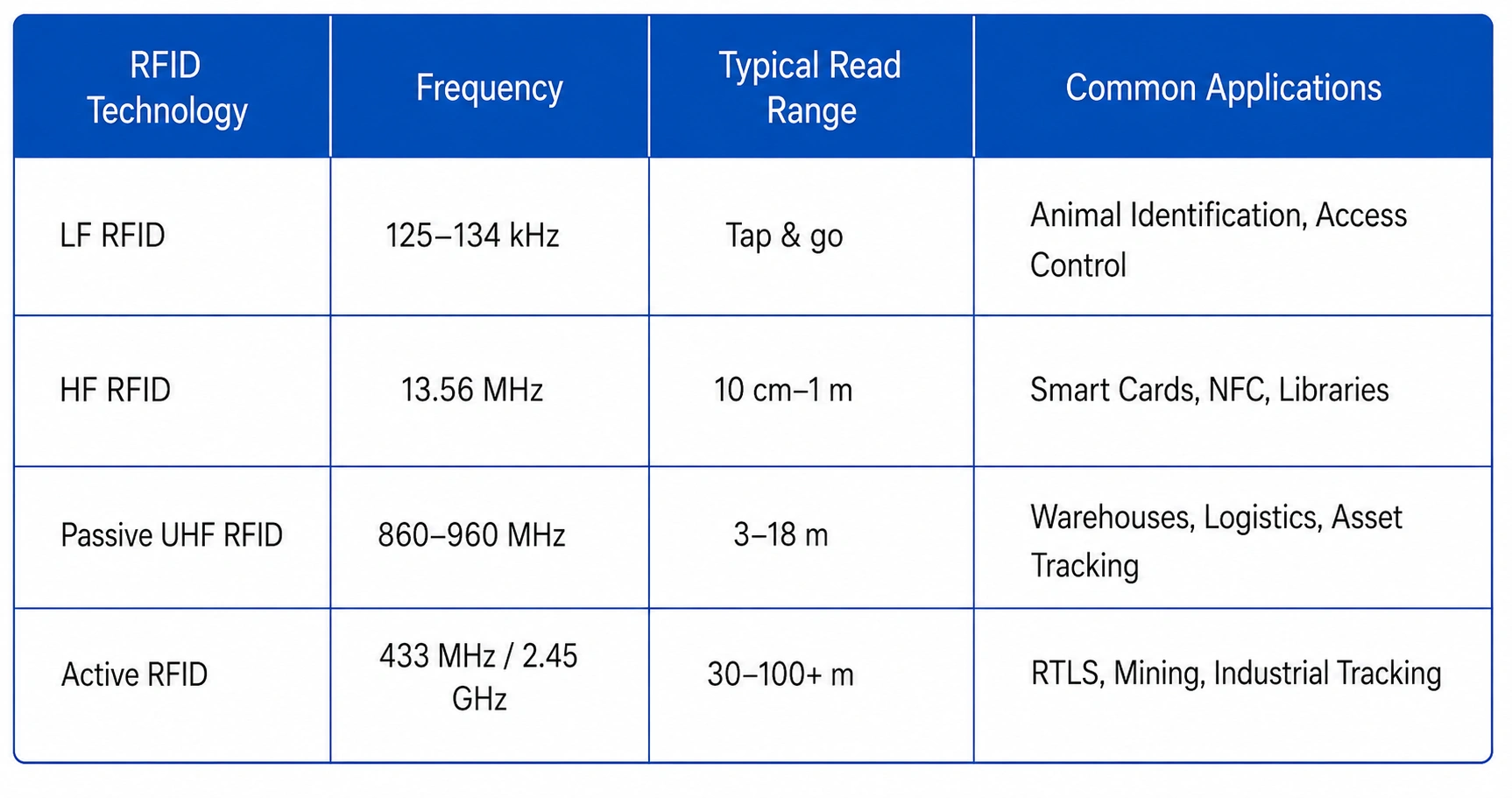
LF RFID read range is based on tap-and-go operation. Operating at 125/134 kHz, Low Frequency RFID offers relatively short read distances but performs well around water and biological materials.

LF RFID is commonly used for animal identification, access control, attendance systems, and industrial applications where close-range identification is required.
4. What is the read range of HF RFID tags?
HF RFID read range generally varies between 10 cm and 1 meter, depending on the reader, antenna, and tag being used.

Operating at 13.56 MHz, HF RFID is widely used for smart cards, library management, ticketing, healthcare, document tracking, and NFC applications where controlled reading distances are preferred.
5. What is the read range of UHF RFID tags?
Among passive RFID technologies, UHF RFID read range is the longest. Passive UHF RFID systems typically achieve read ranges between 3 and 18 meters, although the actual UHF RFID tag distance in meters depends on the RFID reader, antenna, tag quality, installation, and surrounding environment.

Because UHF RFID supports long-range identification and anti-collision technology, it has become the preferred choice for warehouse management, logistics, vehicle access control, manufacturing, retail, and fixed asset management.
Typical RFID Read Range by Technology
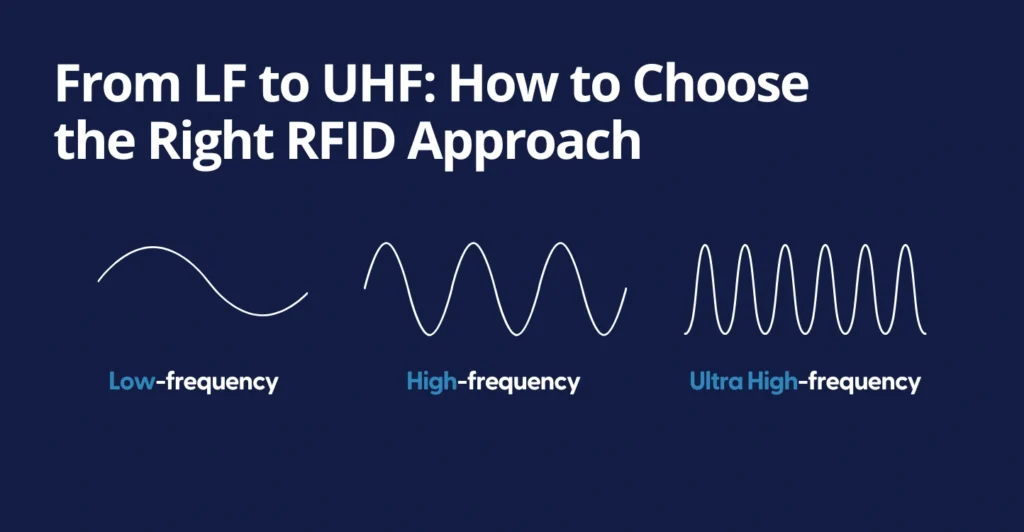
Choosing the right RFID frequency is just as important as understanding RFID read range. While LF, HF, and UHF RFID each offer different read distances and performance characteristics, the right choice depends on your application, operating environment, and business requirements. Learn more in our guide on From LF to UHF: How to Choose the Right RFID Approach
6. What is the read range of active vs passive RFID tags?
The passive RFID tag range depends entirely on energy transmitted by the RFID reader. Since passive RFID tags do not contain a battery, they are smaller, more affordable, and maintenance-free. High-quality passive UHF RFID systems can typically achieve read ranges between 8 and 12 meters under ideal conditions.
An active RFID tag range is significantly greater because active tags contain an internal battery that continuously transmits signals. Active RFID systems commonly achieve read distances of 30–100 meters or more, making them suitable for real-time location systems (RTLS), mining, vehicle tracking, and large industrial environments.
While active RFID offers longer reading distances, passive RFID remains the preferred choice for most commercial applications because of its lower cost, long service life, and ability to support large-scale deployments.
Factors Affecting RFID Read Range
Understanding the factors affecting RFID read range is essential for designing a reliable RFID system. While manufacturers often specify maximum read distances under ideal laboratory conditions, real-world performance depends on several factors, including the RFID frequency, antenna, reader configuration, tag design, and installation environment.
Below are the most important factors that influence RFID read distance.
7. How does RFID frequency affect read range?
The operating frequency is one of the biggest factors that determines RFID read range.
- LF RFID (125–134 kHz) offers a tap & go technology and performs well around water and biological materials.
- HF RFID (13.56 MHz) typically provides a read range of 10 cm to 1 meter and is commonly used for smart cards, libraries, healthcare, and NFC applications.
- UHF RFID (860–960 MHz) offers the longest UHF RFID read range, typically between 3 and 18 meters, making it the preferred choice for warehouse management, logistics, asset tracking, and vehicle access control.
Each frequency has its own advantages, so the right choice depends on the application rather than simply selecting the one with the longest read range.
8. How does antenna design affect RFID read range?
The antenna plays a critical role in determining RFID antenna read range. Even when using the same RFID reader and tag, changing the antenna can significantly affect reading performance.
Higher-gain antennas generally provide longer read distances, while lower-gain antennas create a wider but shorter read zone. Similarly, circularly polarized antennas are ideal when tag orientation varies, whereas linear polarized antennas offer better performance when tag orientation is fixed.
Selecting the correct antenna based on your application helps maximize RFID performance while ensuring consistent and reliable tag detection.
9. How do metal and liquids affect RFID read range?
Metal and liquids are among the most common causes of reduced RFID read range.
Metal reflects radio waves, while liquids absorb them, both of which can reduce reading performance if standard RFID tags are used. This is particularly noticeable in UHF RFID systems, where nearby metal surfaces or liquid-filled containers may reduce the achievable reading distance.
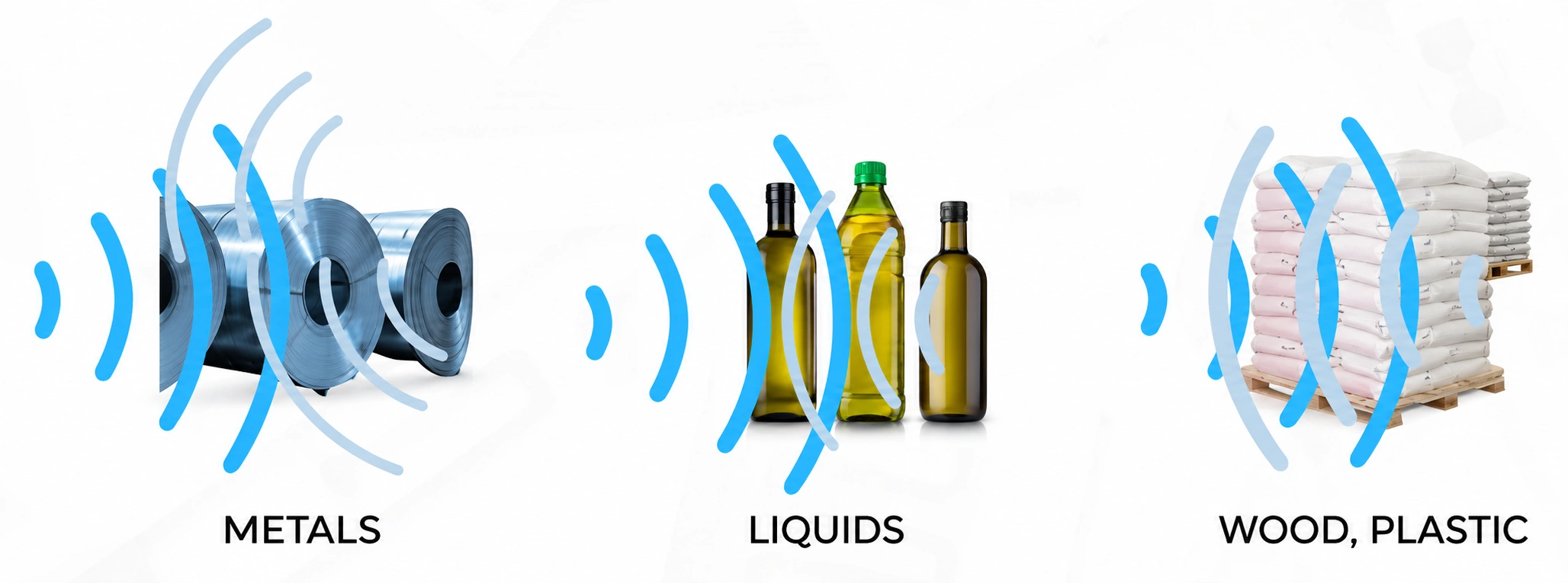
For metal assets, businesses should use specially designed RFID tags for metal surfaces, which are engineered to maintain a reliable RFID tag on metal read range. Proper antenna positioning and installation also help minimise signal interference.
10. Does tag size affect RFID read range?
Yes. In general, larger RFID tags contain larger antennas, allowing them to capture more energy from the reader and achieve longer read distances.
However, selecting the largest tag is not always the best approach. The ideal RFID tag depends on the available mounting space, the surface material, environmental conditions, and the required read distance.
A properly selected tag often delivers better real-world performance than simply choosing the largest available tag.
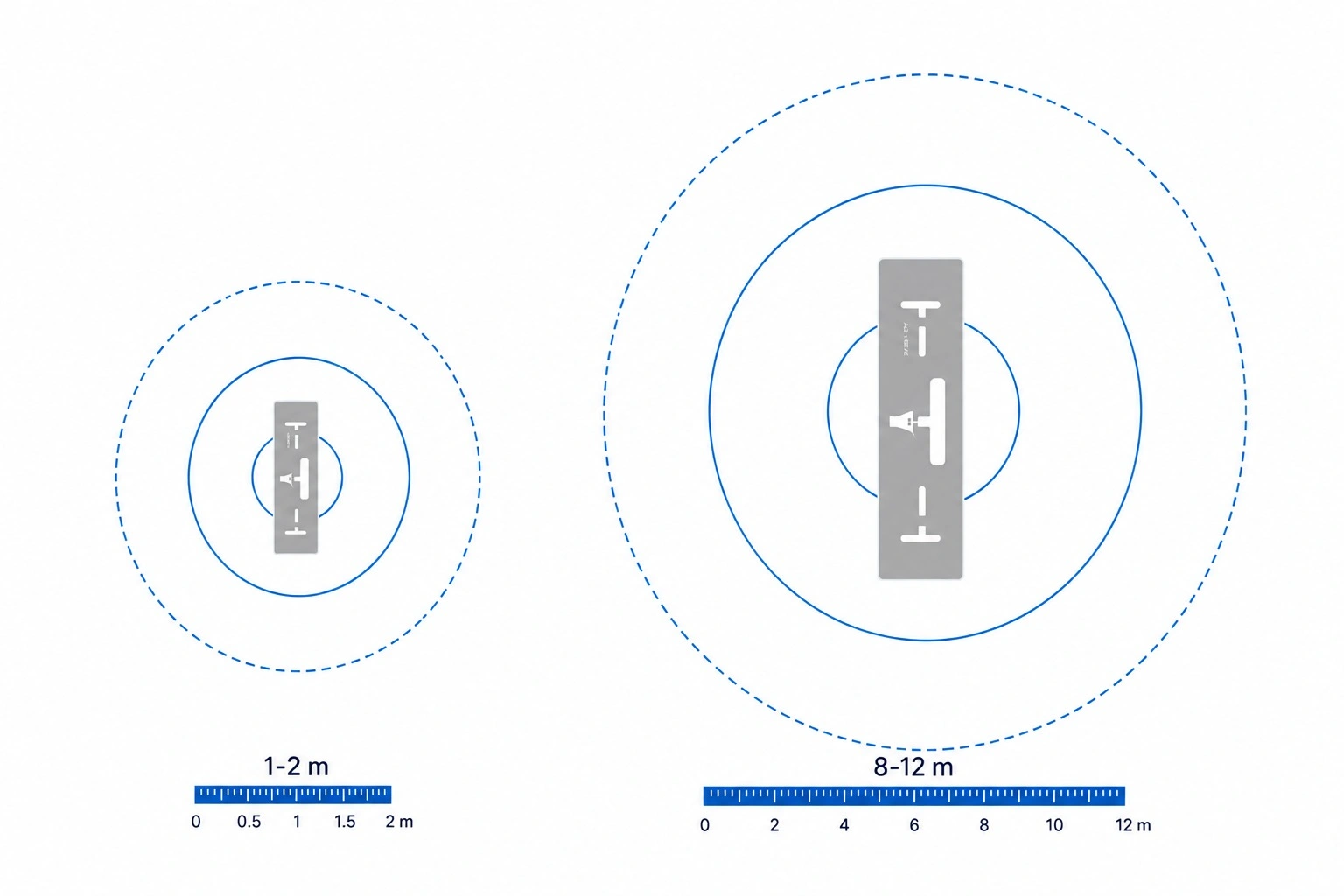
11. Does reader power output affect RFID range?
Yes, but only to a certain extent.
Increasing reader transmit power can improve RFID reader distance, but it is only one part of the overall system. Reader power is also limited by local regulatory requirements, so increasing transmit power beyond the permitted level is not possible.
In many cases, improving antenna placement, selecting the correct RFID tag, or reducing interference has a greater impact on RFID read range than simply using a more powerful reader.
12. Does the environment affect RFID read range?
Absolutely.
The installation environment has a significant impact on RFID performance. Nearby metal structures, liquids, electrical equipment, walls, shelving, and even the orientation of tagged objects can all affect the achievable RFID read range.
This is why performing a site survey before deployment is considered a best practice. Testing the complete RFID system under actual operating conditions helps identify potential sources of interference and ensures reliable performance before full-scale implementation.
To learn more about improving RFID performance, read our guide on Maximizing RFID Efficiency: 5 Key Factors Affecting Read Range, where we explain how reader placement, antenna selection, and environmental conditions influence overall system performance.
Real-World RFID Read Range by Application
The ideal RFID read range depends on the application. While some industries require long-range identification, others only need reliable reads within a controlled area. Choosing the right RFID reader, antenna, and tag combination is more important than simply achieving the longest possible reading distance.
13. What read range is needed for warehouse management?
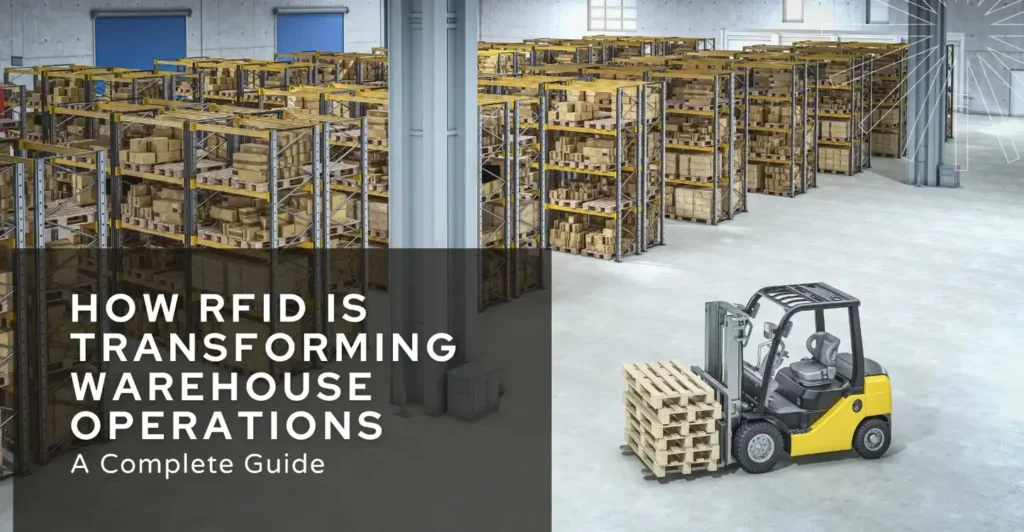
For most warehouse applications, a reliable RFID warehouse read range of 5 to 10 meters is sufficient for accurately identifying cartons, pallets, and inventory moving through dock doors and warehouse portals.
UHF RFID is the preferred technology because it can read multiple tags simultaneously without requiring line-of-sight. Combined with fixed RFID readers and antennas, it helps automate receiving, put-away, inventory counting, and shipping operations while improving inventory accuracy and operational efficiency.
Learn more about implementing RFID in warehouses in our guide to Warehouse Inventory Management with RFID.
14. What is the RFID read range for FASTag and vehicle access control?
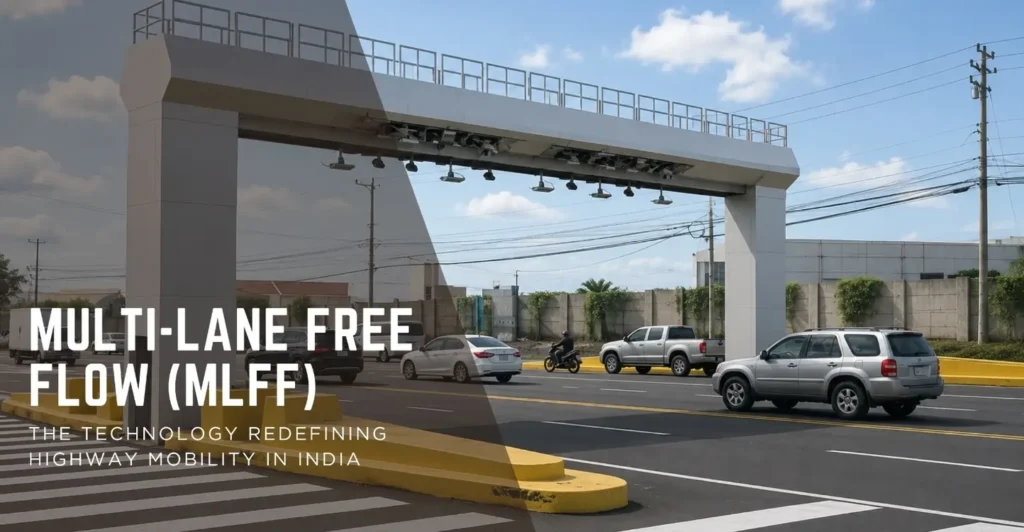
UHF RFID is the most suitable technology for vehicle identification and access control applications. Windshield RFID tags can typically be read from several meters away, allowing vehicles to pass through entry and exit gates without stopping.
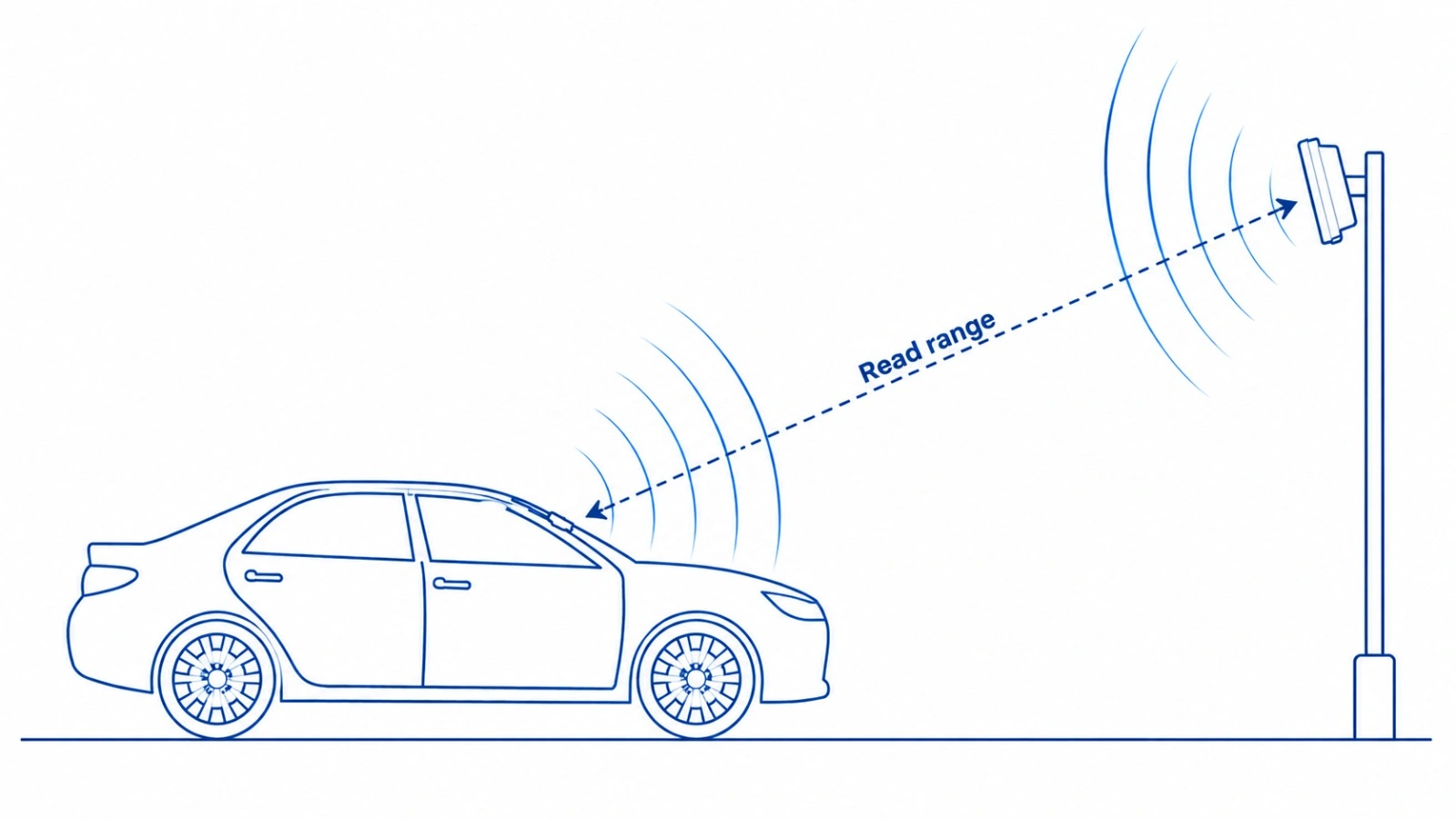
The actual read range depends on factors such as reader placement, antenna selection, vehicle speed, and the type of RFID tag being used. A properly designed system ensures fast and reliable vehicle identification while minimizing missed reads.
You can also see UHF RFID in action in the DMRC Metro Parking RFID Solution, where RFID enables seamless vehicle identification and automated parking access.
15. What RFID read range is required for access control systems?
RFID access control systems generally require a controlled and reliable read range rather than the maximum possible distance.
For pedestrian access, short- to medium-range RFID systems are commonly used to ensure only authorised users are identified at the correct location. For vehicle entry, longer-range UHF RFID systems enable automatic gate operation without requiring drivers to stop or manually present a credential.
The ideal read range should always match the application to avoid unintended tag reads outside the designated access zone.
16. What read range do handheld RFID readers achieve?
Modern handheld devices typically provide an RFID handheld reader range of 3 to 8 meters, depending on the reader, RFID tag, antenna, and operating environment.
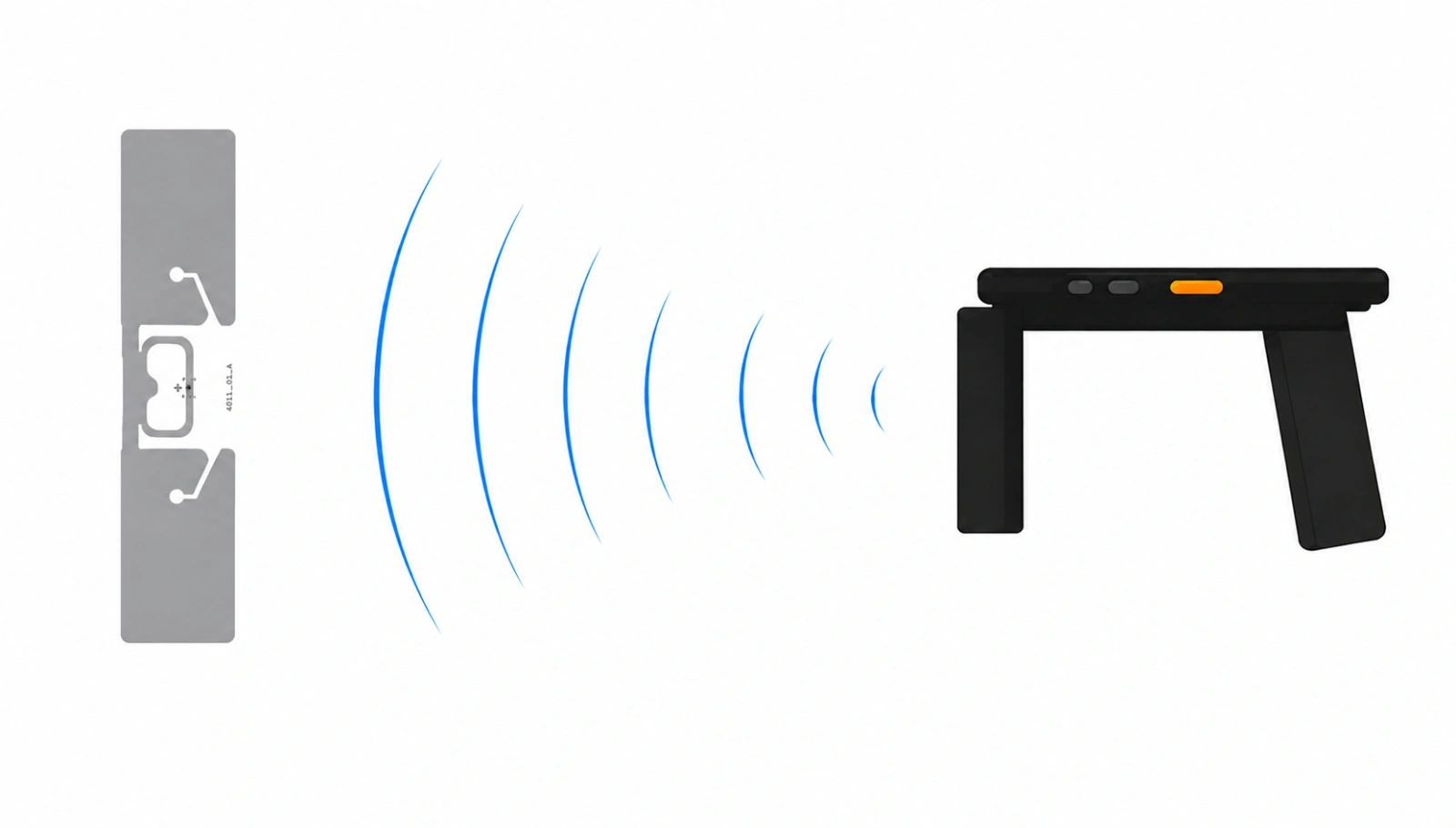
Handheld RFID readers are widely used for inventory audits, asset tracking, cycle counting, retail stock verification, and warehouse management because they provide flexibility while maintaining reliable reading performance.
How to Improve RFID Read Range
Even the best RFID hardware may not deliver the expected performance if the system is not designed correctly. Effective RFID range optimization involves selecting the right combination of readers, antennas, tags, and installation practices.
17. How can I extend my RFID tag read range?
Improving RFID read range is usually achieved by optimising the complete RFID system rather than replacing a single component.
You can improve performance by:
- Choosing the appropriate RFID frequency for your application.
- Using RFID tags designed for the mounting surface.
- Selecting antennas with the correct gain and polarization.
- Positioning antennas to cover the intended read zone.
- Using on-metal RFID tags for metallic assets.
- Reducing interference from nearby metal and liquids.
- Testing the complete system under actual operating conditions before deployment.
In many cases, proper system design has a greater impact than simply increasing reader power.
18. Why is my RFID read range shorter than the specification?
RFID manufacturers usually specify read range under ideal laboratory conditions. In real-world deployments, factors such as tag orientation, antenna placement, nearby metal or liquids, environmental interference, and reader configuration can reduce performance.
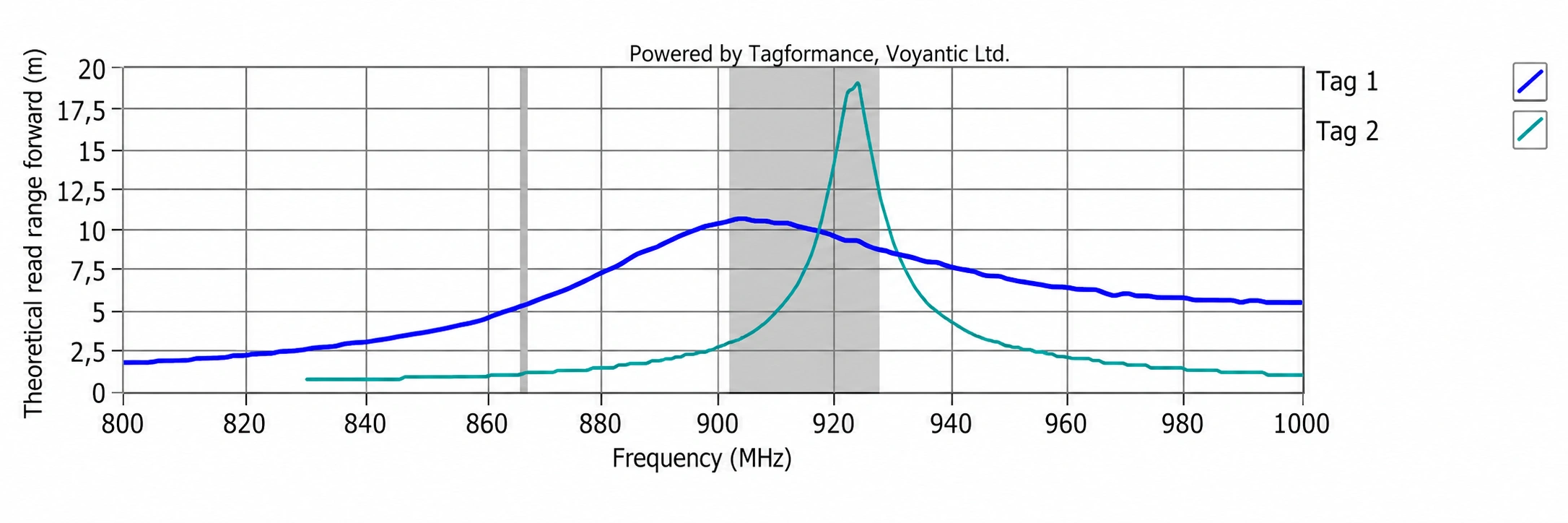
If your system is not achieving the expected RFID read distance, performing a site survey and reviewing the complete hardware configuration often identifies the cause of the problem before replacing equipment.
Advanced RFID Read Range Questions
19. Can RFID read multiple tags at the same time?
Yes. One of the biggest advantages of RFID is its anti-collision capability, which allows an RFID reader to identify and read multiple tagged objects simultaneously within its read zone.
Instead of reading tags one at a time, modern UHF RFID systems use anti-collision protocols to communicate with multiple tags efficiently. This makes RFID ideal for toll automation, warehouse management, logistics, manufacturing, retail, baggage handling, and asset tracking applications where large numbers of tagged items must be identified quickly.
Reading multiple tags simultaneously does not necessarily reduce RFID read range, provided the system is properly designed and the reader, antennas, and tags are correctly configured.
20. What is the maximum RFID read range ever achieved?
The maximum RFID read range depends on the technology being used.
Passive UHF RFID systems can typically achieve read distances of up to 10–22 meters under ideal conditions using high-performance readers, antennas, and tags. Active RFID systems, which use battery-powered tags, can achieve read ranges of 30–800 meters or more, making them suitable for large industrial facilities and real-time location tracking.
Rather than focusing on the maximum possible read distance, businesses should choose an RFID solution that delivers reliable and consistent performance for their specific application.
Conclusion
There is no single answer to the question, “How far can an RFID tag be read?” The actual RFID read range depends on the complete RFID system, including the tag, reader, antenna, operating frequency, installation environment, and application requirements.
Rather than focusing only on achieving the longest reading distance, businesses should aim for a solution that delivers accurate, reliable, and consistent performance under real operating conditions. Whether you’re implementing RFID for warehouse management, vehicle identification, access control, or asset tracking, selecting the right hardware and optimising the installation are essential for a successful deployment.
At ID Tech Solutions, we have been delivering RFID solutions across warehousing, manufacturing, healthcare, logistics, retail, and access control applications for over 20 years. From RFID readers and antennas to tags and complete turnkey solutions, our team can help you choose the right RFID system for your specific application.
Need expert guidance? Contact ID Tech Solutions today or explore our range of RFID Readers, RFID Antennas, RFID Tags & Labels, and Handheld RFID Readers to find the right solution for your business.