RFID is becoming a common part of retail and supply chain operations. From clothing and electronics to everyday household products, more businesses are using RFID tags to keep track of their inventory.
Retailers like Walmart have also introduced RFID tagging requirements for several product categories, encouraging suppliers to adopt the technology.
But there’s something important that businesses need to understand. Not every product is equally easy to track using RFID.
A tag that works perfectly on a cardboard box may not perform the same way when attached to a metal container or a bottle filled with liquid.
So, what makes the difference?
It Starts with the Product, Not the RFID Tag
When businesses start using RFID, they often focus on choosing the reader, the tag, or the software. However, the product itself plays an equally important role.
Think about the variety of products you would find in a supermarket. There are plastic bottles, metal cans, small cosmetic containers, cleaning products, and packaged food items.
All these products have different materials, shapes, and sizes. And these differences can affect how well an RFID tag communicates with a reader.
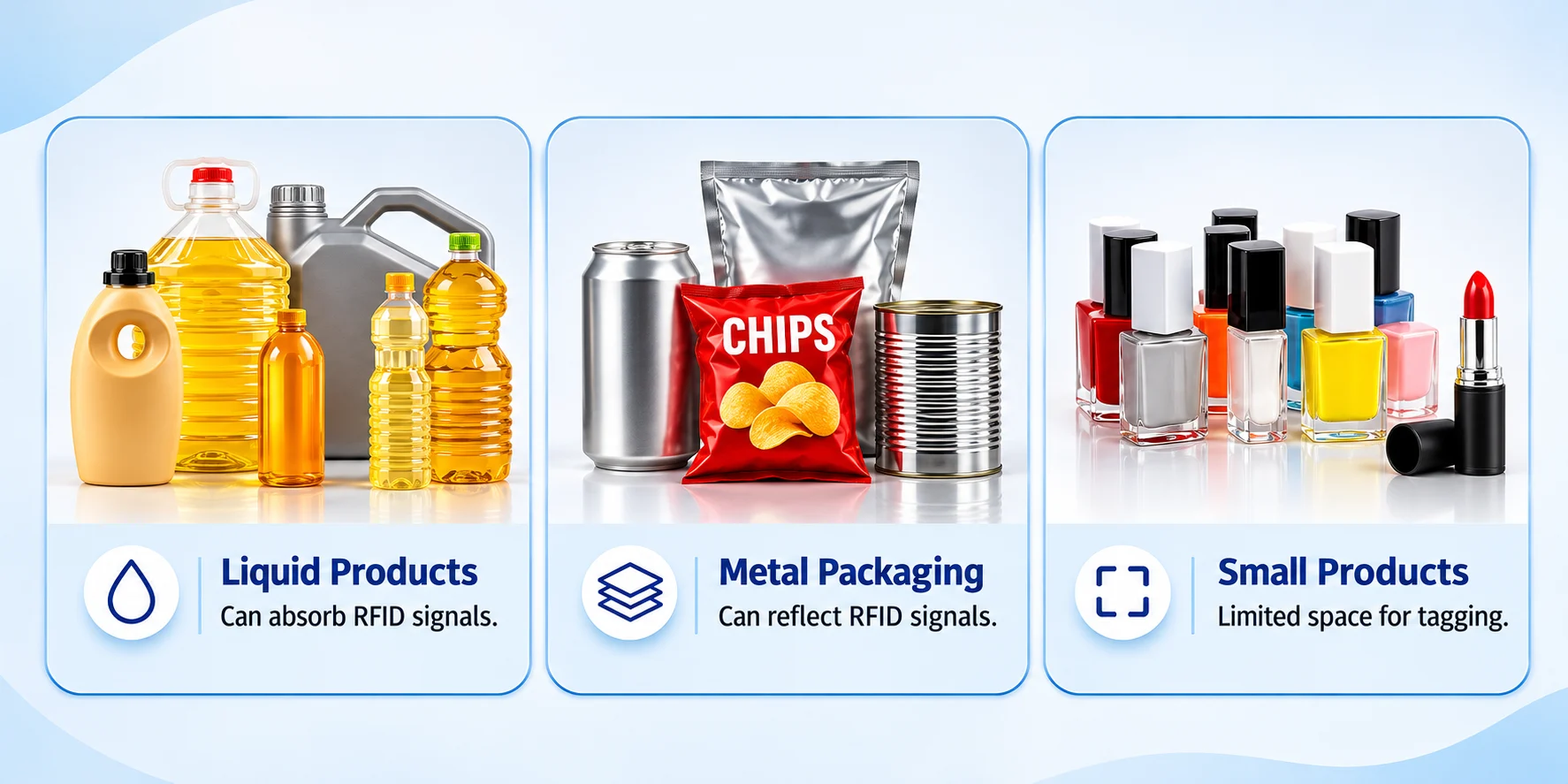
For example:
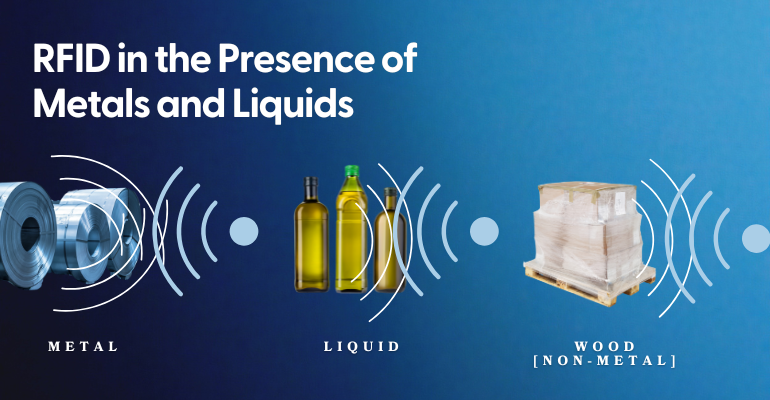
- Liquid products: Water, beverages, shampoos, and cleaning liquids can absorb radio signals, making RFID tags harder to read. ID Tech also discusses the use of RFID flag tags for liquid bottles.
- Metal packaging: Cans, foil packaging, and other metal surfaces can reflect or interfere with RFID signals. For rigid metallic surfaces, businesses can explore Mount on Metal RFID Tags & Labels. Flexible foil packaging requires separate tag testing.
- Small products: Cosmetics, travel-sized bottles, and other compact items may not have enough space for a regular RFID label. Compact options such as the IDT 9610 and IDT Mini Web are available in ID Tech’s UHF RFID Inlays range for evaluation.
This doesn’t mean RFID cannot work on these products. It simply means businesses need to be more careful when choosing and placing their tags.
A Small Tag Has More to It Than You Think
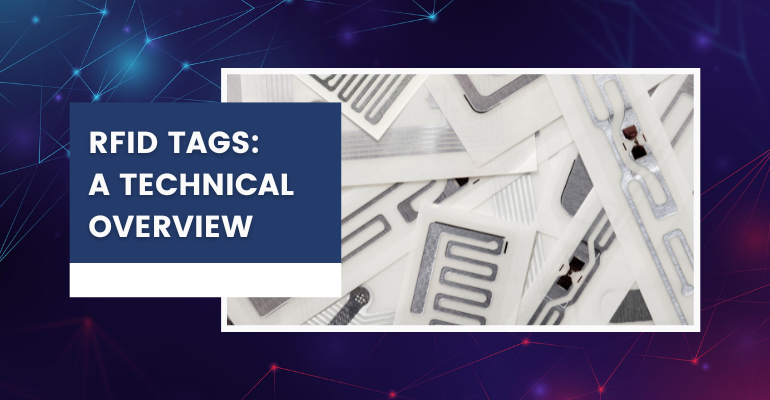
An RFID label might look like an ordinary sticker, but there’s technology working inside it.
The main part is called an RFID inlay, which contains a tiny chip and an antenna.
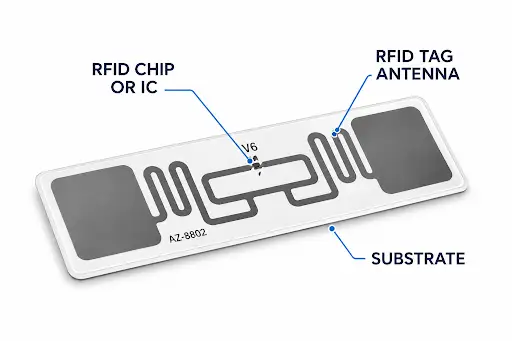
The chip stores the identification information, while the antenna helps the tag communicate with an RFID reader.
Both parts influence how well the tag performs.
For instance, two RFID labels may look almost identical but behave differently when placed on the same product. This could be because of differences in chip sensitivity, antenna design, or the way the tag interacts with the packaging.
That’s why choosing an RFID tag based only on its size or appearance isn’t always a good idea.
The Right Tag Is the One That Works on Your Product
One of the most common mistakes in RFID implementation is assuming that a single tag will work for every product.
In reality, RFID tag selection requires some testing.
A tag that performs well on a dry cardboard package might need a different position or design when used on a bottle of liquid.
Even a small change in tag placement can affect its performance.
Before finalizing an RFID label, businesses should test it on their actual products and packaging. This helps them understand whether the tags can be read consistently during normal operations.
For suppliers working with Walmart, checking the applicable Auburn University RFID Lab (ARC) specifications and approved inlays is also an important part of the process.
The goal isn’t just to attach an RFID tag. It’s to make sure the product can be identified whenever and wherever it needs to be tracked.
Why Suppliers Should Start Thinking About RFID Early
RFID adoption in retail is expanding, and Walmart’s requirements have already encouraged many suppliers to introduce item-level tagging.
For businesses that haven’t started yet, preparing early can make the transition easier.
Selecting suitable tags, testing packaging, checking reader performance, and making changes to existing labeling processes can all take time.
Starting early also gives businesses an opportunity to understand how RFID can fit into their operations, rather than treating it as something they need to implement only when a retailer asks for it.
And once the technology is in place, its benefits can extend well beyond meeting a retailer’s requirements.
RFID Is About More Than Meeting Retail Requirements
When implemented properly, RFID can make everyday inventory operations much easier.
Instead of scanning every barcode individually, businesses can identify multiple tagged products without direct line-of-sight scanning.
This can help warehouse and retail teams count stock faster, locate missing items, reduce manual work, and keep inventory records more accurate.
It can also improve visibility as products move from manufacturing facilities to warehouses and retail stores.
However, all these benefits depend on one basic thing: the RFID tags must be readable and reliable.
If products are repeatedly missed during scanning, businesses may still need manual checks, which reduces the value of automation.
This is why spending time on tag selection and testing is just as important as investing in RFID readers and software.
Getting RFID Right from the Beginning
RFID doesn’t have to be complicated, but it does need proper planning.
Every product is different, and the best RFID solution depends on what you’re tagging, how it’s packaged, and where it will be read.
For suppliers dealing with liquids, metals, or small products, understanding these factors early can prevent problems later.
As more retailers and manufacturers adopt RFID, businesses that focus on reliable tagging today will be better prepared to expand their use of the technology tomorrow.
Because successful RFID implementation isn’t about putting a tag on every product. It’s about making sure every tagged product can be identified when it matters.
Not Sure Which RFID Tag Is Right for Your Product?
Every product comes with its own tagging challenges, and finding the right RFID tag can make all the difference.
At ID Tech, we offer a wide range of RFID tags designed for different products, materials, and applications. Whether you’re working with metal surfaces, liquid products, or small packaging, our team can help you find and test a suitable tagging solution.