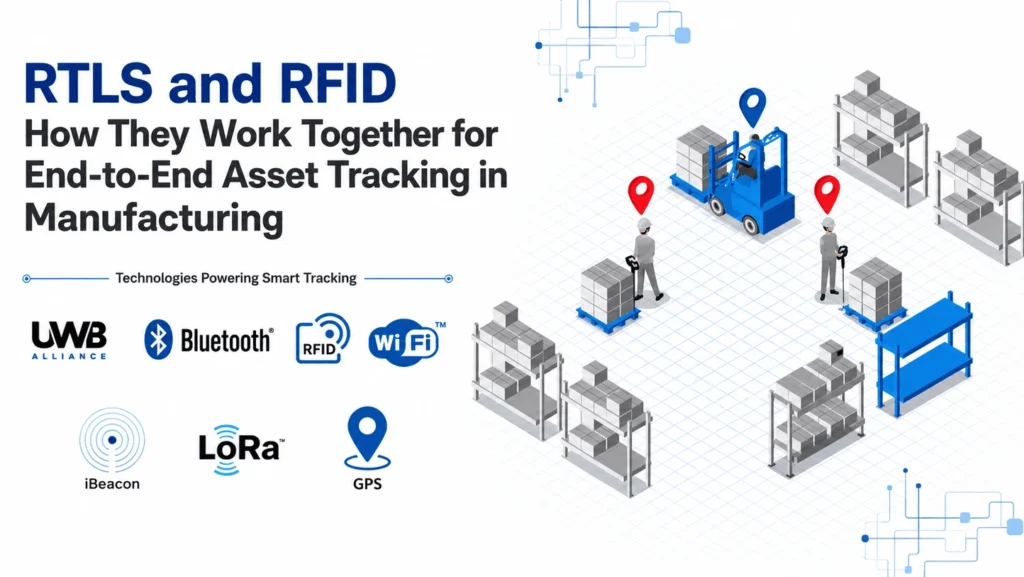
Today, almost every manufacturing company is moving towards digitalization. The focus is no longer just on automating machines, but also on knowing where things are at any given time. Whether it’s a tool that has gone missing, a forklift moving across the warehouse, a pallet waiting for production, a work-in-progress (WIP) item between assembly lines, or even workers and operators moving across different areas of the facility, having real-time visibility helps teams work faster, improve safety, and avoid unnecessary delays.
Like many industrial technologies, RTLS has evolved considerably over the years. Improvements in wireless communication, battery technology, and software platforms have made today’s RTLS solutions more accurate, scalable, and easier to deploy.
Table of Contents
Understanding RTLS Technology
What is RTLS?
A Real-Time Location System (RTLS) is a technology that continuously determines the location of tagged assets or people within a defined area. Unlike conventional tracking systems that only record an asset when it passes a checkpoint, RTLS provides ongoing visibility into its movement throughout a facility.
In a manufacturing plant, RTLS can be used to locate production tools, forklifts, mobile equipment, returnable transport items (RTIs), work-in-progress inventory, and even personnel. Instead of searching for assets manually, operators can instantly view their live location through a centralized software dashboard.
An RTLS system generally consists of three core components:
- Tags: RFID tags, BLE tags, UWB tags, or other location-enabled tags attached to assets, equipment, tools, pallets, or worn by personnel to periodically transmit location signals.
- Readers or Anchors: Installed throughout the facility to receive tag signals and determine their location.
- RTLS Software Platform: Processes location data, calculates asset positions, and provides real-time visibility through dashboards, maps, reports, and alerts.
Depending on the underlying technology, RTLS can provide location accuracy ranging from several meters to just a few centimeters.
How Location Is Calculated
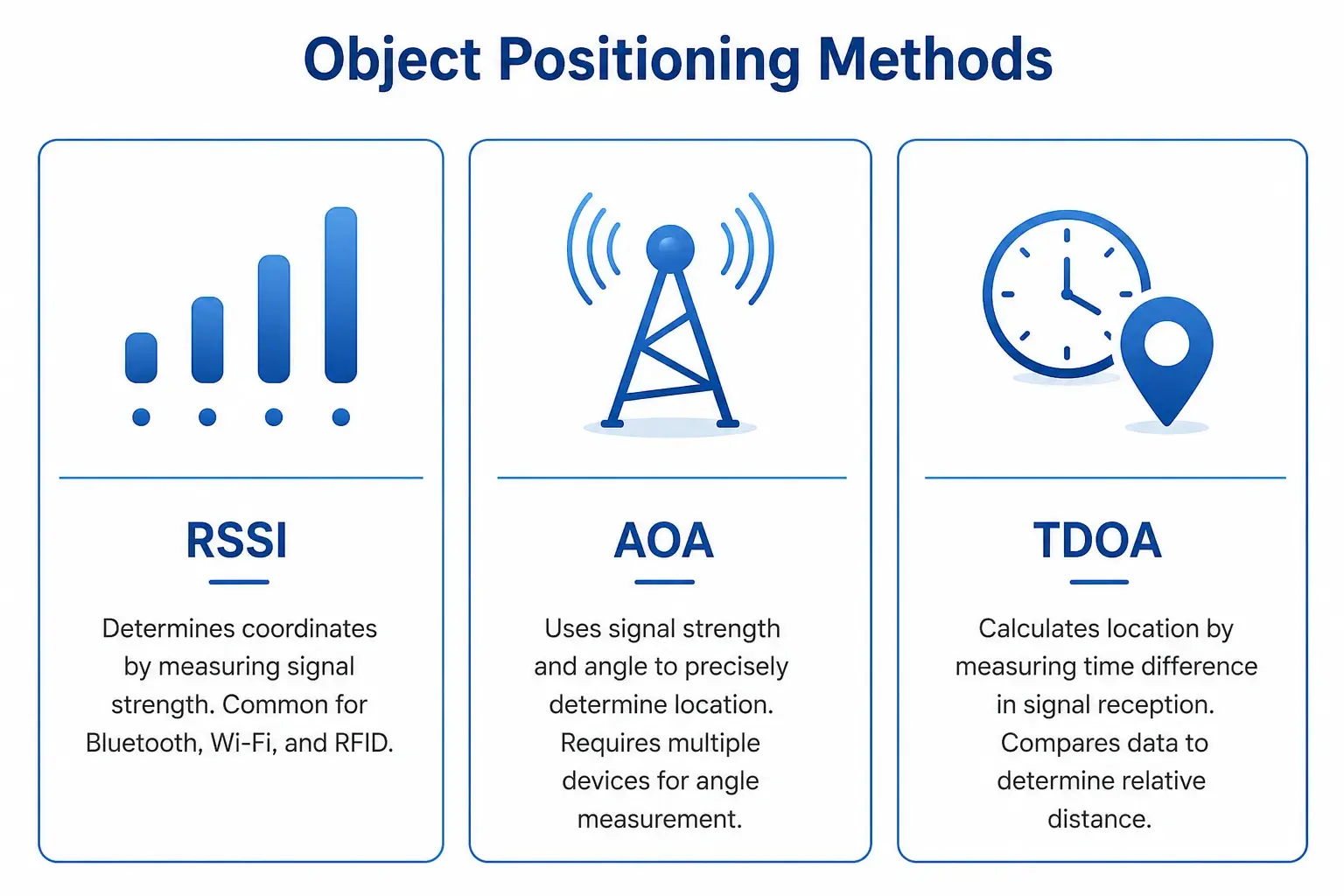
The biggest challenge in indoor positioning is converting wireless signals into an accurate asset location. Different RTLS technologies use different methods to calculate this location, and the method chosen affects the system’s accuracy, reliability, and cost.
Earlier RTLS systems mainly relied on Received Signal Strength Indicator (RSSI). In simple terms, the stronger the signal received from a tag, the closer the asset was assumed to be. However, in real-world environments, radio signals often bounce off walls, machinery, metal racks, floors, and ceilings before reaching the reader. This can make a tag appear to be in a different location than where it actually is, reducing positioning accuracy.
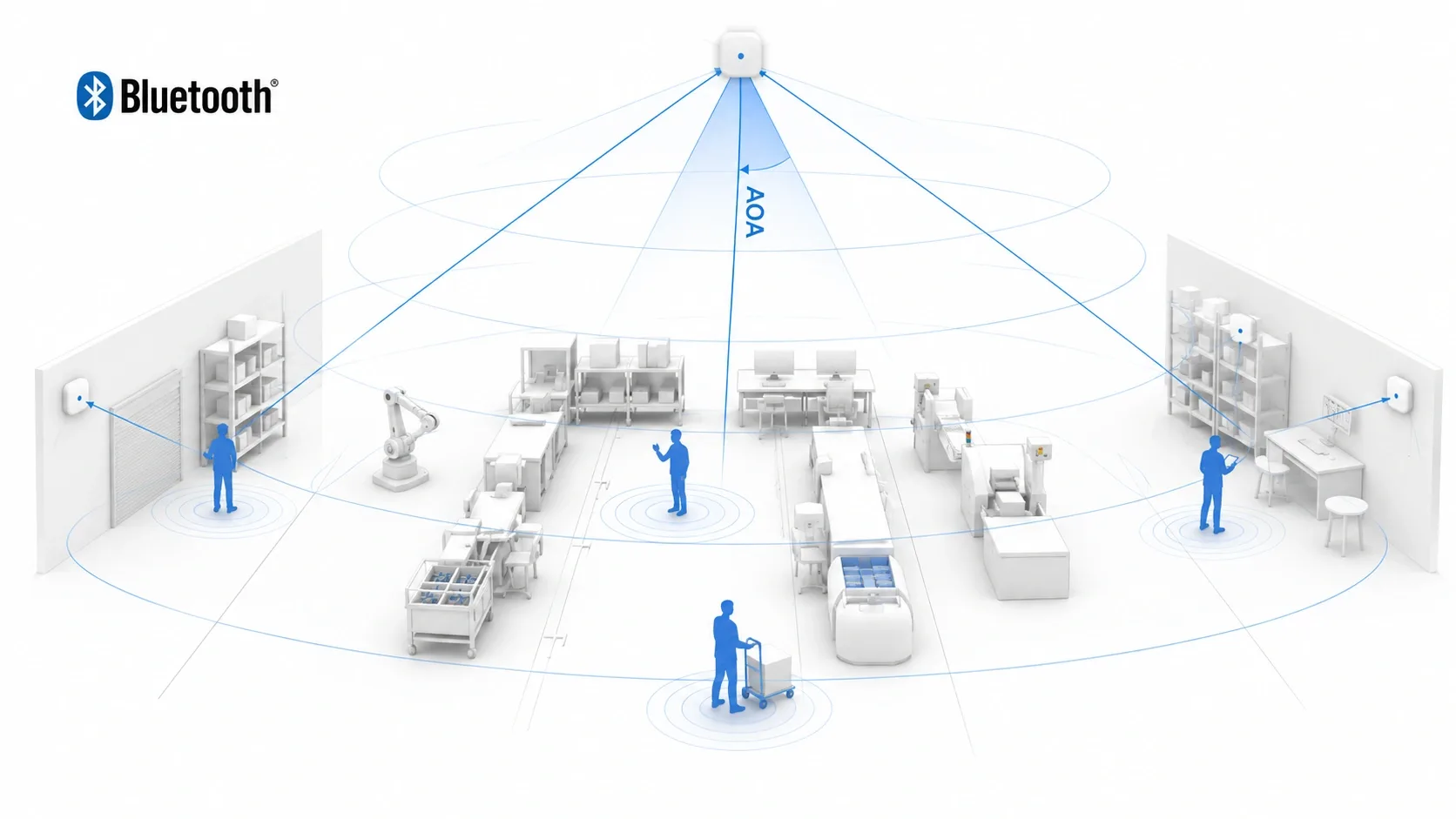
Modern RTLS solutions have improved this significantly. Technologies such as Bluetooth Low Energy (BLE) 5.1 use advanced positioning techniques like Bluetooth Angle of Arrival (AoA), while Ultra-Wideband (UWB) uses precise time-based measurements to deliver much higher accuracy. These technologies provide more reliable location data, even in complex indoor environments, making them well suited for manufacturing, healthcare, warehouses, and other asset-intensive industries.
Technologies Used in RTLS
Different manufacturing environments require different levels of positioning accuracy. Choosing the right RTLS technology depends on the application’s requirements, infrastructure, and budget.
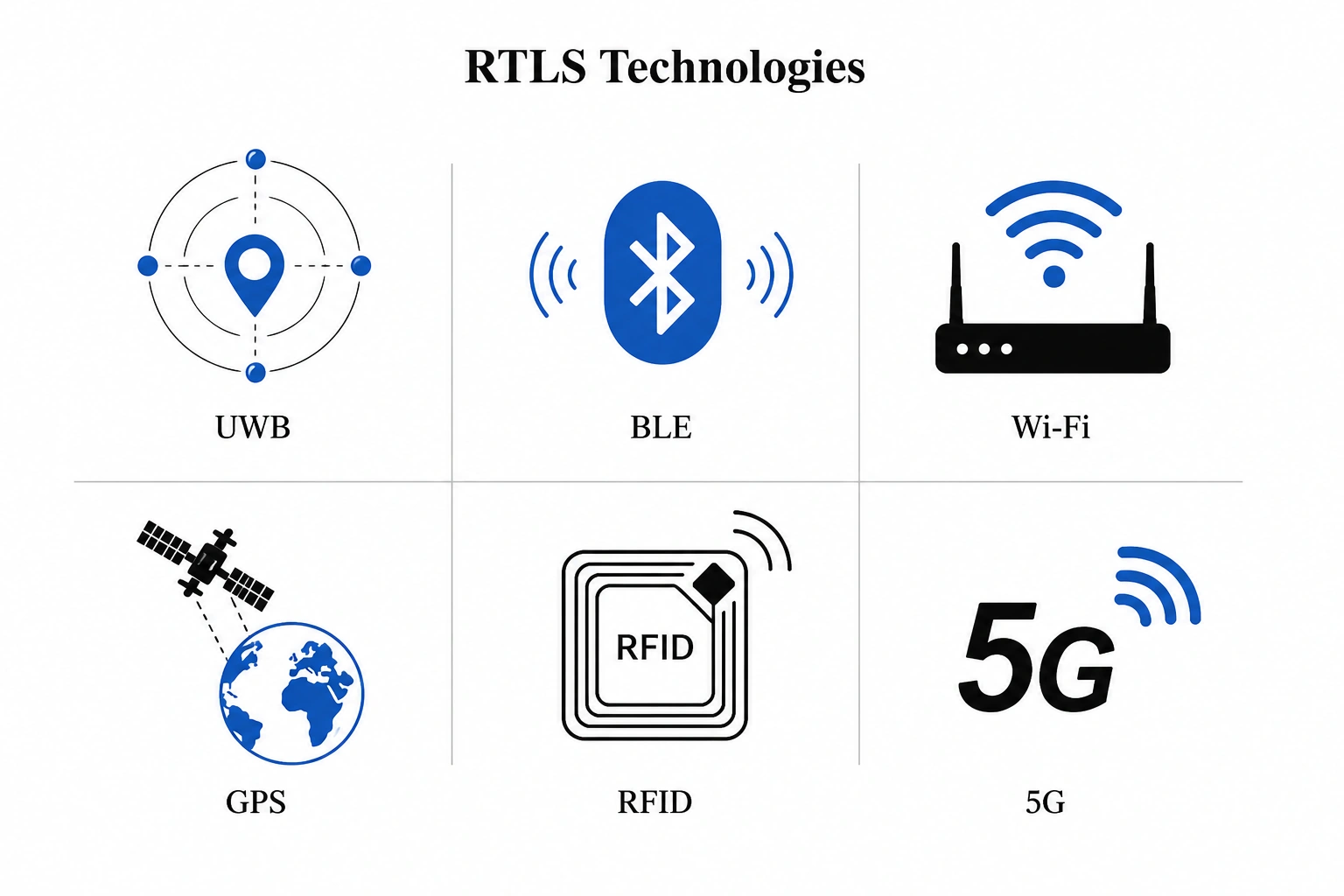
Ultra-Wideband (UWB)
UWB is one of the most accurate RTLS technologies available today, often delivering positioning accuracy of 10-30 centimeters. It uses short-duration radio pulses across a wide frequency spectrum to calculate an asset’s location.
UWB is commonly deployed in automotive manufacturing, aerospace, high-value tool tracking, robotics, and automated production environments where precise positioning is critical.
Bluetooth Low Energy (BLE)
Bluetooth Low Energy (BLE) has become one of the fastest-growing technologies in industrial RTLS deployments due to its balance of cost, battery life, and scalability.
BLE tags periodically transmit small packets of data that are received by nearby gateways or anchors. Based on signal strength (RSSI) or advanced techniques such as Bluetooth Angle of Arrival (AoA), the software estimates the asset’s location.
BLE offers several advantages for manufacturing facilities:
- Long battery life, often lasting several years
- Cost-effective deployment compared to UWB
- Easy scalability across large facilities
- Compatibility with existing Bluetooth-enabled infrastructure
BLE-based RTLS asset tracking is increasingly being used for monitoring pallets, trolleys, mobile equipment, reusable containers, hospital assets, warehouse inventory, and workforce movement.
As Bluetooth technology continues to evolve, BLE is becoming an important building block for Industry 4.0 and smart factory initiatives.
GPS (Global Positioning System)
GPS is the preferred technology for tracking assets over large outdoor areas. It uses satellite signals to determine an asset’s location anywhere in the world.
However, GPS signals perform poorly indoors, making it unsuitable for most manufacturing environments. It is commonly used for fleet management, vehicle tracking, container monitoring, construction equipment, and logistics operations where assets move outside factory premises.
Many organizations combine GPS for outdoor tracking with BLE or UWB for indoor positioning, ensuring continuous visibility across the entire supply chain.
RFID
Although RFID is primarily an identification technology rather than a positioning technology, it plays an important role in many RTLS deployments. RFID readers detect tagged assets whenever they enter a reader’s coverage area, creating location events at predefined checkpoints.
Passive RFID is commonly used for inventory management, work-in-progress (WIP) tracking, warehouse automation, and receiving and dispatch operations. Active RFID tags, which include their own battery, can also be used for longer-range asset tracking and can complement RTLS solutions in certain applications.
Wi-Fi
WLAN (Wi-Fi) is a wireless local network that connects devices without cables. It works using one or more Wi-Fi access points, which regularly broadcast their network name (SSID) so nearby devices can detect and connect. Wi-Fi coverage is usually 30–200 meters, and it can be used for indoor positioning with an accuracy of around 5–10 meters.
RTLS Technology Comparison Chart
| Technology | Typical Indoor Accuracy | Coverage | Key Advantages | Main Limitations | Best Use Cases |
| Ultra-Wideband (UWB) | 10–30 cm | Up to 100 m per anchor | Very high accuracy, reliable indoors | Higher cost, requires many anchors | AGVs, robotics, worker safety |
| Bluetooth Low Energy (BLE AoA) | 0.1–1 m | 100+ m | Low-power tags, easy to integrate | Needs AoA gateways, performance can reduce in crowded RF environments | Healthcare, retail, asset tracking |
| Wi-Fi | Around 1–2 m | 30–200 m | Uses existing Wi-Fi infrastructure | Accuracy reduces with obstacles | Offices, indoor navigation |
| Active RFID | 3–5 m | Up to 100 m+ | Long-range tracking, tags transmit automatically | Battery-powered tags, lower accuracy | Yard management, vehicle and tool tracking |
| GPS / GNSS | Around 5 m outdoors | Global | No local infrastructure required | Does not work well indoors | Fleet tracking, outdoor logistics |
| Ultrasound / Infrared | 3–30 cm | 5–10 m | Very high accuracy in small areas | Requires line-of-sight, short range | Hospitals, laboratories, room-level tracking |
RTLS vs RFID: What’s the Difference?
Although RTLS and RFID are often mentioned together, they solve different business problems. Understanding this difference helps manufacturers select the right technology or, more importantly, combine both for maximum operational visibility.
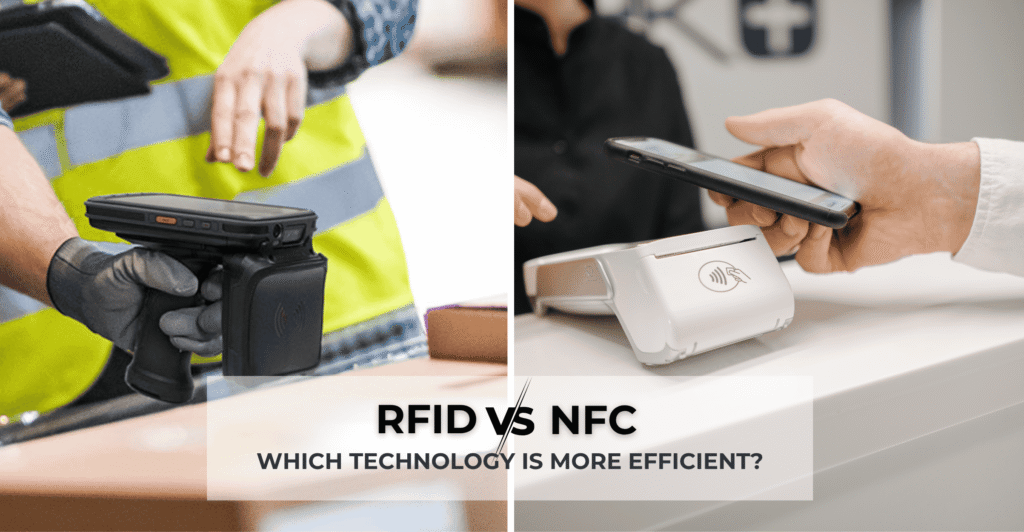
RFID is primarily an identification technology. An RFID reader detects a tagged asset whenever it enters the reader’s coverage area. Each read event confirms that the asset has passed a particular location, such as a warehouse gate, production line, conveyor, or dispatch dock.
RTLS, on the other hand, is a continuous location technology. Instead of waiting for an asset to reach a checkpoint, RTLS continuously estimates its position within the facility, allowing operators to monitor movement in real time.
Think of it this way: RFID tells you when an asset entered or exited a specific location, while RTLS tells you where that asset is right now.
RFID or RTLS Asset Tracking: Which Is the Best Fit?
There isn’t a single answer to this question because RFID and RTLS are designed to solve different challenges. The right choice depends on what you’re trying to track and the level of visibility your operations require.
If your goal is to identify assets at specific checkpoints such as receiving, production, or dispatch, RFID is often the most practical solution. It’s widely used for inventory management, work-in-progress (WIP) tracking, and warehouse automation because it captures assets quickly and accurately whenever they pass through a reader’s read zone.
RTLS, on the other hand, is better suited for assets that move continuously within a facility. Instead of recording an asset only at predefined checkpoints, RTLS provides ongoing location updates, making it much easier to locate equipment, tools, forklifts, or returnable containers at any point in time.
A simple way to think about it is:
| Use RFID When… | Use RTLS When… |
| Tracking inventory | Tracking mobile equipment |
| Monitoring receiving and dispatch | Locating tools instantly |
| Managing WIP between production stages | Tracking forklifts and trolleys |
| Identifying assets at fixed checkpoints | Monitoring live movement across the facility |
In many modern manufacturing plants, the question is no longer RFID or RTLS, it’s how to use both together. Combining these technologies provides complete asset visibility, from the moment materials arrive until finished products leave the factory.
Advantages of Tracking Assets with RTLS and RFID
Using RTLS and RFID together helps manufacturers improve visibility, efficiency, and control over their operations. RFID identifies assets at key checkpoints, while RTLS provides their real-time location throughout the facility.
Some of the key benefits include:
- Real-time visibility of assets, equipment, and personnel.
- Faster asset location, reducing time spent searching for tools or materials.
- Improved inventory accuracy with fewer manual errors.
- Better asset utilization with RFID fixed asset tracking to monitor equipment usage and availability.
- Reduced downtime through timely maintenance and quicker asset retrieval.
- Higher productivity by helping employees work more efficiently.
- Seamless integration with ERP, MES, and WMS systems for smarter operations.
Together, RTLS and RFID help manufacturers make faster decisions, reduce operational costs, and build a more connected and efficient production environment.
Industry Applications of RTLS and RFID
Organizations across various industries use RTLS and RFID to locate assets faster, improve inventory accuracy, increase productivity, and strengthen workplace safety. While the use cases vary, the goal remains the same: delivering real-time visibility and better operational control.
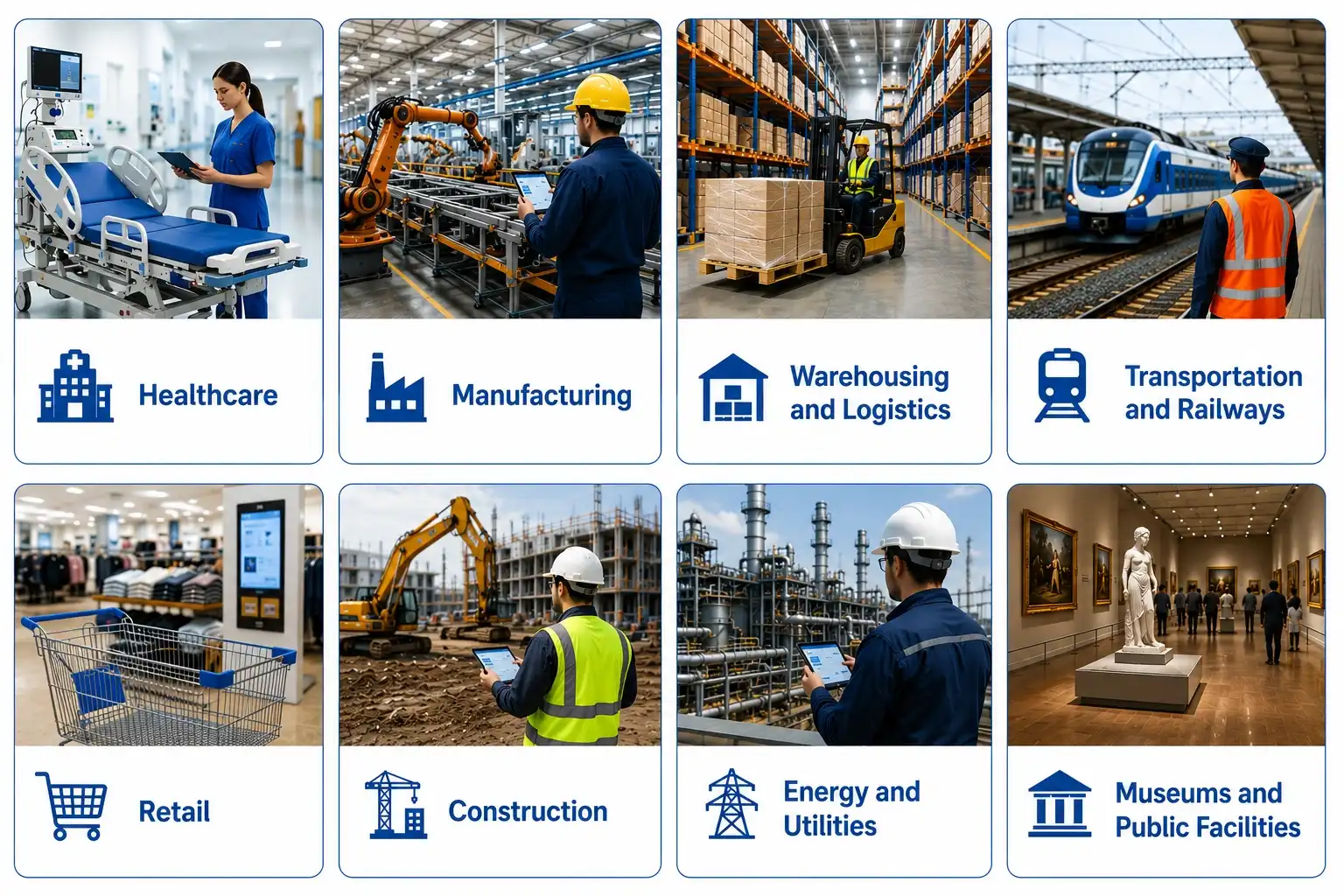
Healthcare
Hospitals use RTLS to track patients, medical equipment, and healthcare staff in real time. RFID helps identify medical assets, while RTLS improves equipment availability, patient safety, and response times.
Manufacturing
Manufacturers use RTLS and RFID to track tools, equipment, work-in-progress (WIP), and returnable assets throughout the production process. This improves inventory visibility, reduces downtime, and increases operational efficiency.
Warehousing and Logistics
Warehouses use RTLS and RFID to monitor pallets, containers, forklifts, and inventory movement. Real-time visibility helps improve order picking, inventory accuracy, and warehouse productivity.
Transportation and Railways
RTLS and RFID help track vehicles, wagons, maintenance equipment, and passenger movement. These technologies improve fleet visibility, asset utilization, and operational safety.
Retail
Retailers use RFID for inventory management and RTLS to monitor shopping carts, mobile assets, and customer movement. This helps improve stock accuracy and enhance the customer experience.
Construction
Construction companies use RTLS to track heavy equipment, tools, and materials across dynamic job sites. Real-time visibility helps prevent asset loss, improve equipment utilization, and increase worker safety.
Energy and Utilities
Power plants, refineries, and utility companies use RTLS to monitor workers, vehicles, and critical equipment in hazardous environments. Geofencing and real-time alerts help improve safety and emergency response.
Museums and Public Facilities
Museums, airports, and large public venues use RTLS to track valuable assets, improve visitor navigation, and monitor equipment in real time.
Also Read:
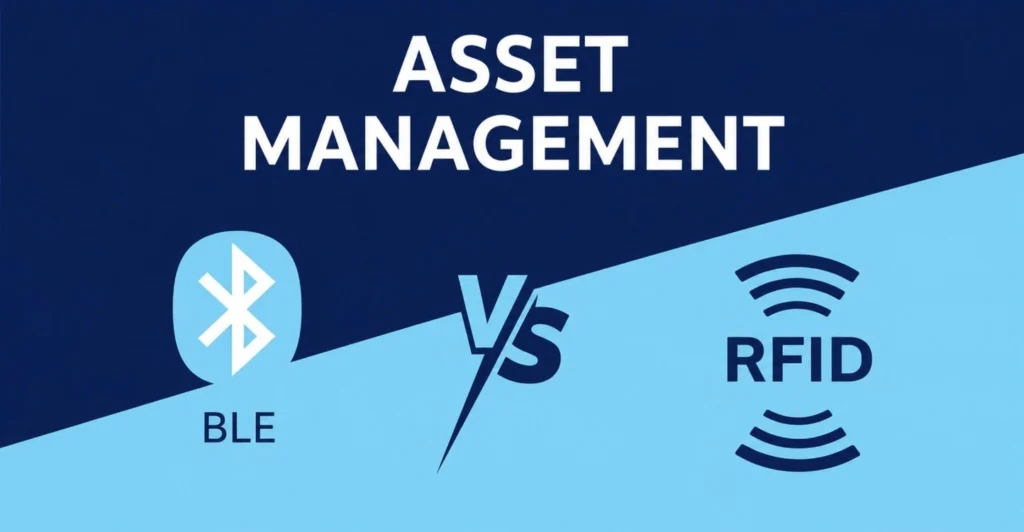
👉 BLE vs RFID for Asset Tracking — Understand the key differences in cost, accuracy, and use case before choosing your asset tracking technology.
Frequently Asked Questions
1. What is the difference between RTLS and RFID?
RTLS provides continuous real-time tracking, while RFID provides point-to-point tracking of assets or personnel at specific read points or checkpoints.
2. Can RTLS and RFID be used together?
Yes. In fact, many manufacturers combine both technologies. RFID captures key transactional events such as receiving and dispatch, while RTLS tracks asset movement between those events, providing end-to-end visibility.
3. How do RFID and RTLS generate location data?
RFID determines an asset’s location when it is detected by an RFID reader at a specific checkpoint. RTLS calculates location continuously using technologies such as Bluetooth Low Energy (BLE), Ultra-Wideband (UWB), Wi-Fi, or LoRaWan, depending on the deployment.
4. When should manufacturers choose RTLS instead of RFID?
RTLS is a better choice when continuous location visibility is required, such as tracking mobile equipment, tools, forklifts, personnel, or other assets that frequently move throughout a facility. RFID is more suitable for inventory tracking and checkpoint-based applications.
5. What is an RFID tag used for?
An RFID tag stores a unique identifier that can be read wirelessly by an RFID reader. It is commonly used to identify and track inventory, tools, equipment, work-in-progress items, pallets, and finished goods across manufacturing and supply chain operations.